


Cover: AI-generated editorial illustration supplied by Raw Truth Media; not an archival photograph.
RAW TRUTH MEDIA | HISTORICAL INVESTIGATION
The role of Russian Orthodox institutions, Arab intellectuals and imperial competition in Ottoman Palestine.
Long before the establishment of the State of Israel, before the British Mandate, and before Palestinian nationalism emerged as an organized political movement, the Russian Empire was building an extensive network of religious, educational and cultural institutions across Ottoman Palestine.
Russian diplomats, Orthodox missionaries, teachers and imperial philanthropists entered a region where religious authority, imperial competition and local communal identities were deeply intertwined. Their activities brought them into conflict with the Greek Orthodox Patriarchate of Jerusalem, whose ecclesiastical hierarchy governed a largely Arabic-speaking Orthodox population.
In 1882, the establishment of the Imperial Orthodox Palestine Society marked a significant expansion of Russian involvement. Through schools, teacher-training institutions, pilgrimage facilities and charitable activities, Russia developed relationships with local communities that extended well beyond the traditional protection of Christian holy sites.
Among the graduates of Russian-sponsored educational institutions were individuals who later contributed to Arabic literature, journalism, translation and intellectual life in Palestine. Their experiences raise an important historical question: did Russia’s educational ambitions unintentionally help cultivate the cultural foundations upon which Palestinian national identity and consciousness would later develop?
The answer requires more than political speculation. It requires examining Russian diplomatic intentions, Greek ecclesiastical records, Ottoman political developments and the writings of the intellectuals themselves.
The surviving evidence reveals a complicated relationship between imperial ambition, religious rivalry and local cultural agency. It also challenges the assumption that modern national identities emerge through a single political event or from one external power.
This investigation follows that evidence — and asks how far the Russian connection really went.
From Imperial Ambition to Cultural Influence: Russia’s Entry into Ottoman Palestine
Long before the emergence of modern Palestinian nationalism, another struggle was unfolding in Jerusalem: a contest for religious authority, institutional influence and political patronage within the Orthodox Christian world.
At its centre stood the Greek Orthodox Patriarchate of Jerusalem, the Russian Empire and an Arabic-speaking Orthodox population whose relationship with its ecclesiastical leadership would become increasingly contested.
The historical significance of this struggle extends beyond church administration. It raises a question that has received comparatively little attention in popular discussions of Palestinian identity: to what extent did Russian imperial institutions contribute to the educational, cultural and intellectual environment from which modern Palestinian consciousness eventually emerged?
To investigate that question, we must return to the nineteenth century, when Palestine was still part of the Ottoman Empire and the Russian government was expanding its involvement in the affairs of Eastern Christianity.
The Eastern Question and the struggle for Jerusalem
During the nineteenth century, Jerusalem became an increasingly important arena of European competition.
Britain, France, Russia and other European powers pursued influence within the Ottoman Empire through diplomacy, religious protection, pilgrimage, education and charitable institutions.
For Russia, the Holy Land possessed particular significance. The empire presented itself as a protector of Eastern Orthodox Christianity, and Jerusalem offered both religious prestige and opportunities to extend Russian influence beyond its borders.
Yet Russian policy was neither uniform nor consistently hostile to the Greek Orthodox hierarchy.
The Greek ecclesiastical historian Archimandrite Kallistos Miliaras, in “The Holy Places in Palestine and the Rights of the Greek Nation over Them”, reproduces nineteenth-century diplomatic material illustrating the complexity of Russia’s early position.
According to the documents discussed on pages 520–524, Russia initially opposed proposals that would have fundamentally rearranged the administration of the Holy Places under European supervision. Instead, Russian diplomacy defended existing ecclesiastical arrangements while seeking stronger protections for Orthodox interests and Russian pilgrims.
This distinction is important. Russia did not arrive in Palestine with a single, fully developed programme to replace Greek ecclesiastical authority. Its strategy evolved as political circumstances, institutional opportunities and local relationships changed.
Porphyry Uspensky: A religious mission with political implications
A decisive development occurred in the 1840s with the dispatch of Archimandrite Porphyry Uspensky to the Ottoman East.
His assignment was not simply a pilgrimage.
The instructions reproduced by Miliaras indicate that Porphyry was expected to examine the condition of Orthodox institutions, establish relationships with Eastern clergy, investigate the activities of competing Christian missions and report his findings through Russian diplomatic channels. The mission was intended to operate discreetly.
Porphyry’s observations would help Russian officials understand the ecclesiastical and political landscape of Jerusalem at a time when European influence was intensifying.
Lora Gerd’s independent scholarship supports the broader political significance of this undertaking. In her study of the Palestine Society, she describes Porphyry’s early mission as closely connected to Russian foreign-policy objectives, including oversight of donations and the strengthening of Russia’s position among Eastern Christian institutions.
In 1847, Porphyry became head of the first Russian Ecclesiastical Mission in Jerusalem. His activities helped establish a more permanent framework for Russian religious and cultural engagement.
But there is a significant disagreement over how his relationship with the Greek Orthodox hierarchy should be interpreted.
Miliaras portrays Porphyry as suspicious of the Greek clergy and as someone whose activities threatened to encourage opposition among Arabic-speaking Orthodox Christians.
Gerd presents a more qualified picture. Her research indicates that Porphyry did not initially favour an aggressive campaign against Greek ecclesiastical authority. Rather, he envisaged cooperation among Orthodox communities under Russian protection, while supporting educational opportunities for local Arab Christians.
These interpretations are not necessarily mutually exclusive in every respect. A policy intended by its Russian proponents to strengthen Orthodoxy could still have been perceived by Greek ecclesiastical authorities as an intrusion into their jurisdiction.
Nevertheless, the distinction between documented Russian intentions and the Greek Patriarchate’s perception of those intentions must remain central to our investigation.
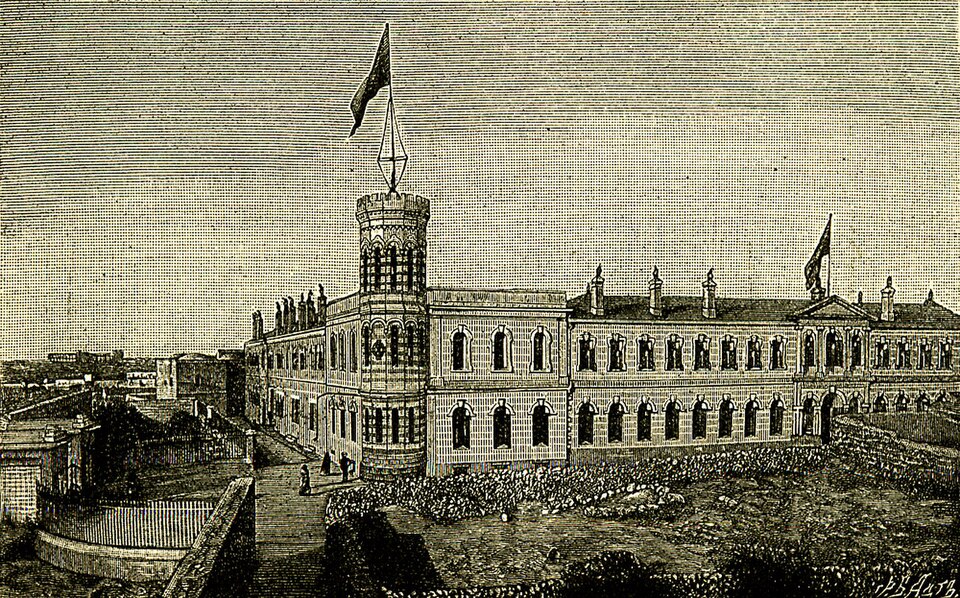
The Imperial Orthodox Palestine Society: Education as an instrument of influence
The foundation of the Imperial Orthodox Palestine Society in 1882 marked a major expansion of Russian activity. Under imperial patronage, the Society developed educational, charitable, scholarly and pilgrimage-related institutions throughout Palestine and the wider Ottoman Levant. Its schools were especially consequential.
According to Lora Gerd, the Society maintained approximately 100 schools across Palestine, Syria and Lebanon in the early twentieth century. Its network included teacher-training seminaries, urban schools and smaller village institutions.
Unlike some competing European missionary systems, the Russian educational programme placed considerable emphasis on Arabic-language instruction.
Russian was taught as an additional language, while Arabic literature and history formed part of the curriculum. Russian educational materials were translated into Arabic, and local teachers played an important role in delivering instruction.
The implications extended beyond literacy. By training Arabic-speaking teachers, translators and future writers, the Society helped create institutions through which local intellectual life could develop.
It also strengthened relationships between Orthodox communities and the Russian Empire. This was a form of cultural diplomacy, but one with consequences that extended beyond the intentions of its imperial sponsors. Gerd explicitly distinguishes the promotion of Arab cultural self-consciousness from a deliberate programme to create Arab nationalism.
The Greek Patriarchate’s resistance
The expansion of Russian institutions was not welcomed universally. Miliaras describes serious opposition within the Greek Orthodox Patriarchate of Jerusalem, particularly when Russian initiatives appeared to challenge its established authority.
One dispute concerned a Russian hospice near the Church of the Holy Sepulchre.
The land had been acquired by the Russian government in 1859. Decades later, proposals to transform the property into a church provoked opposition from Patriarch Gerasimos and the Brotherhood of the Holy Sepulchre. In the material reproduced on pages 851–856, the controversy developed into a diplomatic dispute involving Russian representatives, the Patriarchate and Ottoman authorities. The Patriarchate objected to what it regarded as the creation of a competing ecclesiastical establishment near its own historic seat.
The dispute was about more than a building. It exposed a fundamental question of authority: could a foreign Orthodox power establish institutions in Jerusalem independently of the Greek Orthodox Patriarchate, while claiming to act for the benefit of the same religious community?
For the Greek Brotherhood, the issue concerned jurisdiction, ecclesiastical order and the preservation of historic rights.
For Russian officials, independent institutions offered a means of assisting pilgrims, expanding religious activity and strengthening imperial influence.
For Arabic-speaking Orthodox Christians, meanwhile, the rivalry potentially opened additional avenues for education, patronage and participation.
But opportunity did not necessarily mean political allegiance. Local communities possessed their own interests and grievances, which cannot simply be reduced to Russian manipulation.
The dispute continued into 1896. Miliaras reproduces correspondence showing that Russian diplomats pressed for consecration of the chapel, invoking the wishes of the imperial family. On 22 May 1896, the Patriarchate performed the consecration under ecclesiastical conditions intended to regulate the chapel’s use.
The Russian-Educated Generation: From Classrooms to Palestinian Newspapers
If the Russian Empire helped shape the intellectual environment of Ottoman Palestine, the clearest evidence is not found in imperial proclamations alone. It is found in the lives of the people educated within its institutions.
By the late nineteenth century, Russian-sponsored schools were training Arabic-speaking Orthodox Christians who would later become teachers, translators, journalists and scholars. Some remained in Palestine. Others travelled to Russia, Europe or the Americas, carrying their education into much wider intellectual networks.
Their careers offer an opportunity to examine how foreign-sponsored education intersected with local cultural development.
But they also reveal something more complicated: Russian education did not produce a single political ideology, nor did its graduates necessarily understand their identities in identical ways.
Khalil Baydas: Russian literature enters the Arabic world
One of the most significant figures associated with this educational network was Khalil Baydas (1874–1949), the Palestinian writer, translator and educator.
Baydas belonged to a generation that encountered Russian literature through the educational and cultural institutions established in Ottoman Palestine. He subsequently became an important figure in Arabic literary translation, introducing Russian literary works and narrative techniques to Arabic-speaking audiences. His literary journal, Al-Nafa’is al-Asriyya, contributed to the circulation of fiction, criticism and cultural commentary during a period of significant intellectual transformation.
The importance of Baydas lies not simply in his knowledge of Russian literature.
Translation enabled intellectuals to introduce new literary forms, social questions and ways of discussing collective experience. Russian literature entered Arabic not as an untouched foreign product, but through the decisions and interpretations of Arabic-speaking translators.
Baydas was therefore not merely a recipient of Russian influence. He was an active cultural intermediary. This distinction matters when considering the relationship between imperial institutions and emerging identities.
The Russian Empire could finance schools and encourage particular educational programmes. It could not necessarily determine how graduates would subsequently use the knowledge they acquired.
Baydas’s career illustrates how an educational initiative intended to expand Russian cultural influence could also contribute to an increasingly autonomous Arabic literary environment.
Baydas also translated Russian fiction into Arabic, including Pushkin’s The Captain’s Daughter in the late 1890s. Spencer Scoville’s research on Baydas underscores the agency of the translator: the selection and adaptation of Russian works for Arabic readers were intellectual choices.
From Russian Textbooks to the Name “Palestinian”: The 1898 Connection
A particularly revealing connection appears in the history of a Russian geographical work and its Arabic translation. According to historian Zachary J. Foster, Akim Alekseyevich Olesnitsky’s A Description of the Holy Land, written in Russian in 1875, referred to inhabitants of the region as “Palestinians.” In 1898, Khalil Baydas translated the work into Arabic. Foster identifies its references to Palestinian inhabitants as among the earliest known modern Arabic uses of the designation. This is evidence of terminology moving through a Russian-to-Arabic intellectual channel — not necessarily proof that the word, the people, or their attachment to the region originated in Russia.
The educational connection is equally striking. Foster identifies Baydas, Salim Qub‘ayn and Najib Nassar as early Arab writers who used the designation and who had attended the Russian teachers’ seminary in Nazareth. The institution taught Arabic alongside other subjects and brought students from different local communities into a shared educational environment. Such experiences could encourage a broader geographical vocabulary, even while religious, local, Ottoman and Arab affiliations continued to coexist.
The Arabic-language press subsequently amplified this vocabulary. Foster records approximately 170 uses of “Palestinian” or “Filastini” across more than 110 articles published in newspapers between 1908 and 1914. These examples show that the term had entered public discussion before the British Mandate.
A Russian book translated by a Russian-educated Arab writer provides a traceable route by which a particular expression circulated. It does not demonstrate that Russian officials directed the invention of a national identity. What the episode reveals is subtler: imperial cultural institutions sometimes supplied the tools, texts and networks through which local intellectuals developed them further.
The evidence concerns the documented circulation of a geographical designation. It does not establish that this was its first-ever use, that Russian educators introduced it intentionally or unintentionally, or that the term alone constituted a modern nationalist programme.
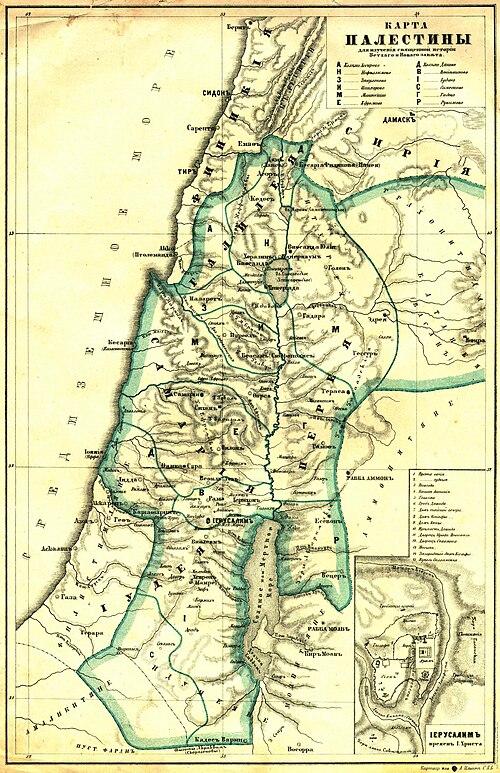
Other Russian-educated journalists
Ilia Zaka, associated with the Arabic newspaper An-Nafir, was another graduate whose career illustrates the reach of the Russian educational network. His inclusion here is evidence of the network’s connection to journalism, not proof that its graduates shared a single nationalist programme.
Kalthum Odeh Vasilieva: From Nazareth to Russian academia
The story of Kalthum Odeh Vasilieva (1892–1965) reveals another dimension of the Russian educational enterprise: the opportunities it created for women and the intellectual relationships that developed across imperial borders.
Born in Nazareth, Odeh studied at the Russian women’s teacher-training seminary in Beit Jala, completing her education there in 1908. She subsequently worked as a teacher before marrying a Russian doctor in 1913. The couple travelled to Russia in 1914, but the outbreak of the First World War prevented their return to Palestine.
Odeh eventually pursued a distinguished academic career in Russian and Soviet institutions, contributing to the study and teaching of Arabic. Her biography demonstrates that the Russian educational network was not limited to preparing clergy or strengthening religious loyalty. It also created pathways for women to acquire professional qualifications and participate in international intellectual life.
For our investigation, Odeh represents the reciprocal character of these cultural relationships. Russia was not simply transmitting knowledge to Palestine. Arabic-speaking scholars and educators also brought their language, experience and intellectual traditions into Russian academic institutions. Her career illustrates how an imperial educational project could produce forms of cultural exchange that outlasted the empire itself.
Iskandar Kezma: The Arab educator behind the Russian school network
To understand the development of Russian-sponsored education, it is also necessary to examine the people who administered the schools.
Iskandar Djubrail Kezma (1860–1935) was one of the most important. Born in Damascus, Kezma received theological education in Russia before returning to the Ottoman Levant. After working in Beirut, he became involved in administering the Palestine Society’s educational institutions in Galilee. From 1886, he directed the Society’s educational activities in the Nazareth area and played a central role in developing its teacher-training system.
Kezma also translated Russian textbooks into Arabic. His work reveals how Russian educational policy depended upon local Arab intellectuals who could translate institutional ambitions into practical programmes.
The network was financed and encouraged by Russian institutions, but its daily operation depended heavily upon Arabic-speaking teachers and administrators.
Beyond the Orthodox Community: Did Russian Influence Reach Muslim Arabs?
Although Russian educational initiatives were directed primarily toward Arabic-speaking Orthodox Christians, their wider intellectual consequences cannot be examined within the boundaries of a single religious community.
By the late Ottoman period, Christian and Muslim Arabs participated in overlapping networks of education, journalism and political debate. Newspapers circulated across communal boundaries, while questions concerning Palestine's administration, its population and its political future increasingly entered a shared Arabic-language public sphere.
Of particular significance is the presence of Russian-educated intellectuals within the emerging Arabic-language literary and journalistic networks of late Ottoman Palestine. Figures such as Khalil Baydas, Salim Qub‘ayn and Najib Nassar invite closer examination of the relationship between foreign-sponsored education and the developing vocabulary of Palestinian territorial identity.
If their writings helped articulate Palestine as a distinct homeland, an important question follows: to what extent did Russian educational institutions provide the intellectual foundations through which such ideas could be expressed and circulated?
The question becomes even more consequential when considered beyond the Orthodox community, within the wider Arabic-speaking public sphere shared by Muslim and Christian readers.
Yet the Muslim contribution to Palestinian consciousness also emerged from institutions and political traditions outside Russian influence. Ottoman schools, Muslim scholarly families, local political leaders and the broader Arab intellectual revival formed part of the same historical transformation.
The available evidence makes this a legitimate line of investigation, although the precise extent of that influence requires further documentary verification.
The Ottoman dimension
The Ottoman Empire’s nineteenth-century reforms provide an essential starting point.
The Tanzimat reforms sought to reorganize administration, law, education and relations between the imperial government and its subjects. Subsequent developments, including the expansion of state schooling and the constitutional politics of the late Ottoman period, helped create new opportunities for public debate.
The Ottoman Land Code of 1858, the provincial reforms of 1864 and the Ottoman Constitution of 1876 belonged to a wider process of administrative and political transformation. These reforms did not automatically produce national identities. Nevertheless, they altered the institutional environment in which people understood their relationship to government, locality and community.
Palestine’s towns and villages were not isolated from these developments.
Local intellectuals participated in an Ottoman world increasingly connected through schooling, travel, commerce, newspapers and political debate.
Consequently, any explanation of Palestinian consciousness must account for the Ottoman framework within which much of that consciousness developed.
From communal representation to national consciousness
A central methodological difficulty arises here.
Demands by Arabic-speaking Orthodox Christians for greater participation in church administration should not automatically be interpreted as demands for Palestinian national independence.
The two could intersect, but they represented different political and institutional questions.
Arab Orthodox reformers might seek greater representation within their church while retaining broader Ottoman, Arab or local identities.
Similarly, the Russian government’s support for Arabic-language education or particular ecclesiastical reforms does not establish that it intended to create a separate Palestinian nation.
The evidence supports a more carefully defined proposition: Russian involvement strengthened certain educational and institutional networks through which Arabic-speaking Christians participated in the cultural and political transformations of the late Ottoman period. Those transformations contributed to the environment in which modern Palestinian consciousness developed.
Empire, philanthropy and the limits of influence
Russian educational policy operated within a wider contest for influence among European powers. In Jerusalem, the Russian mission sometimes conflicted with Greek ecclesiastical authority, while the Society’s schools provided opportunities that local Arab educators could use for their own purposes. In Antioch, Russian involvement also intersected with demands for Arab clerical representation; the circumstances there should not be conflated with those of Jerusalem. (Gerd; Miliaras)
The Imperial Orthodox Palestine Society combined charitable, scholarly and pilgrimage objectives with imperial patronage. Initially supported substantially through donations, it later received direct state-budget support. Its institutional character illustrates the central tension of this history: real educational benefits and foreign-policy ambitions could coexist, without necessarily determining how students would eventually think or write. (Gerd; Kane)
Conclusion: The Russian Connection — How Far Did It Go?
The evidence examined in this investigation reveals that Imperial Russia was far more than a distant observer of developments in Ottoman Palestine. Through religious diplomacy, educational institutions, financial patronage and its relationships with Arabic-speaking Orthodox communities, Russia became an influential participant in the region's intellectual and institutional transformation.
The significance of this involvement extended beyond the Orthodox Church. Russian-sponsored schools educated individuals who later contributed to Arabic-language journalism, literature and the emerging vocabulary of Palestinian territorial consciousness.
The 1898 Arabic translation by Khalil Baydas of a Russian geographical work offers a particularly revealing example. It establishes a documented connection between Russian-language scholarship, a Russian-educated Arab intellectual and an early modern Arabic use of the designation Palestinian.
This raises a historical question that deserves closer scrutiny: to what extent did educational institutions established to advance Russian imperial interests also help shape the language, intellectual networks and cultural foundations of an emerging Palestinian identity?
The answer requires further examination of contemporary Arabic publications, Russian diplomatic archives and the educational records of the Imperial Orthodox Palestine Society.
What can already be established is that the emergence of modern Palestinian consciousness cannot be fully understood without considering the international institutions and imperial rivalries that helped transform Ottoman Palestine.
The Russian connection was real. But how far did its influence extend in shaping modern Palestinian consciousness — and how much of that history remains unexplored?
References and bibliography
[1] Agsous, Sadia. “The Palestinian Graduates of the Imperial Orthodox Palestine Society (IOPS) and the Making of the Native Cultural Nahḍa.” Contemporary Levant (2021). https://doi.org/10.1080/20581831.2021.1881714.
[2] Agsous, Sadia. “The Making Stage of the Modern Palestinian Arabic Novel in the Experiences of the udabāʾ Khalīl Baydas (1874–1949) and Iskandar al-Khūri al-BeitJāli (1890–1973).” In European Cultural Diplomacy and Arab Christians in Palestine, 1918–1948: Between Contention and Connection. Palgrave Macmillan, 2021. https://doi.org/10.1007/978-3-030-55540-5_4.
[3] Beška, Emanuel, and Zachary J. Foster. “The Origins of the Term ‘Palestinian’ (‘Filasṭīnī’) in Late Ottoman Palestine, 1898–1914.” Academia Letters (2021), article 1884. https://doi.org/10.20935/AL1884.
[4] Foster, Zachary J. “The Origins of the Term ‘Palestinians’: Early Use, Eclipse, and Revival.” Interactive Encyclopedia of the Palestine Question (PalQuest). https://www.palquest.org/en/highlight/41681/origins-term-palestinians.
[5] Gerd, Lora. “Arab Intellectuals in Russia (Nineteenth–Twentieth Century): Teaching, Research and Politics.” In Colonial Vocabularies: Teaching and Learning Arabic, 1870–1970, edited by Sarah Irving, Karène Sanchez Summerer, Rachel Mairs, and Lucia Admiraal, 55–78. Amsterdam University Press, 2025. https://doi.org/10.5117/9789048560394_ch03.
[6] Gerd, Lora. “The Palestine Society: Cultural Diplomacy and Scholarship in Late Tsarist Russia and the Soviet State.” In European Cultural Diplomacy and Arab Christians in Palestine, 1918–1948: Between Contention and Connection, edited by Karène Sanchez Summerer and Sary Zananiri, 273–302. Palgrave Macmillan, 2021.
[7] Gerd, Lora. “Russian Policy in the Patriarchate of Antioch from the 1840s to 1914: ‘Soft Power’ in Syria and Lebanon.” Contemporary Levant (2021). https://doi.org/10.1080/20581831.2021.1881715.
[8] Kane, Eileen. “Orthodoxy across Borders: Maps of the Institutions of the Imperial Orthodox Palestine Society (IPPO).” In Russian-Arab Worlds: A Documentary History, edited by Eileen Kane, Masha Kirasirova, and Margaret Litvin, 92–98. Oxford University Press, 2023. https://doi.org/10.1093/oso/9780197605769.003.0010.
[9] Miliaras, Kallistos. Οι Άγιοι Τόποι εν Παλαιστίνη, και τα επ’ αυτών δίκαια του Ελληνικού Έθνους [The Holy Places in Palestine and the Rights of the Greek Nation over Them]. Vol. 2. Thessaloniki: University Studio Press, 2002. Relevant cited passages: 520–524 and 851–856. Edition details and quotations should be checked against the physical volume.
[10] Scoville, Spencer. “Reconsidering Nahdawi Translation: Bringing Pushkin to Palestine.” The Translator 21, no. 2 (2015): 223–236. https://doi.org/10.1080/13556509.2015.1073466.
Contextual reading (not cited as direct evidence)
Fishman, Louis A. Jews and Palestinians in the Late Ottoman Era, 1908–1914: Claiming the Homeland. Edinburgh University Press, 2020.
Khalidi, Rashid. Palestinian Identity: The Construction of Modern National Consciousness. Columbia University Press, 1997.
Stavrou, Theophanis G. Russian Interests in Palestine, 1882–1914: A Study of Religious and Educational Enterprise. Thessaloniki: Institute for Balkan Studies, 1963.
Source transparency
The 1898 Baydas translation and early newspaper counts are attributed to Foster and Beška; the original 1898 Arabic edition and complete 1908–1914 newspaper corpus were not independently inspected for this article. Miliaras reproduces diplomatic documents from a Greek ecclesiastical standpoint; those positions are attributed rather than treated as proof of Russian intent. The article argues for influence and transmission, not the deliberate invention of a national identity.



Leave a Reply