


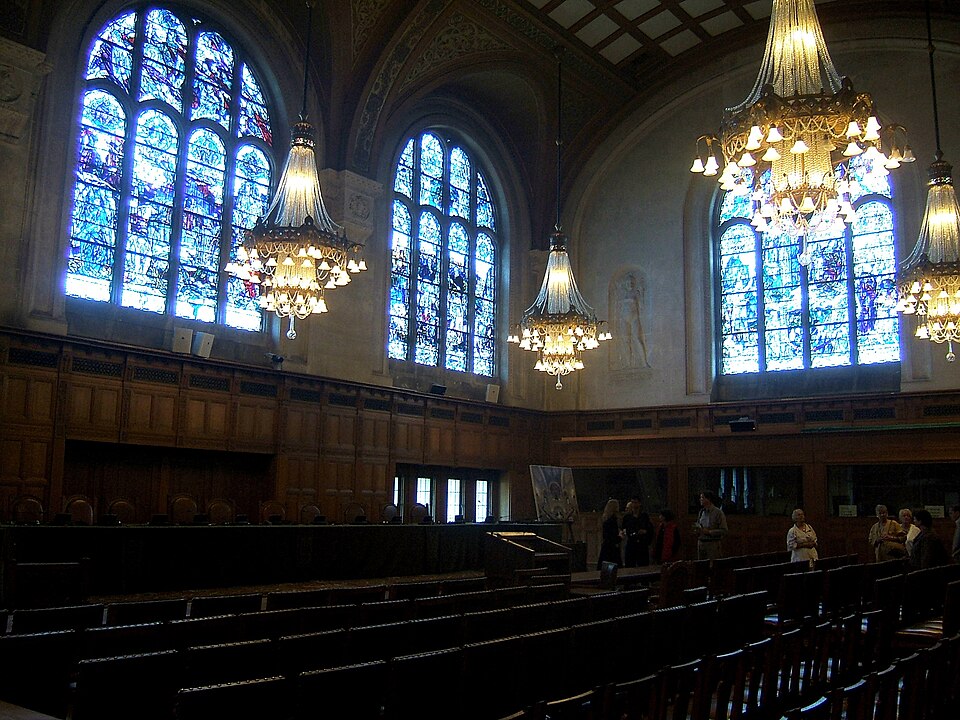
Featured image: The Peace Palace in The Hague, 26 June 2018 (file photo). Photo: Steven Lek / Wikimedia Commons, CC BY-SA 4.0. Resized. Thumbnail crops are also licensed under CC BY-SA 4.0.
RAW TRUTH MEDIA | GLOBAL POWER & INSTITUTIONS
Analysis & Opinion | International Law, Genocide and Global Governance
Genocide is the gravest accusation in international law. It describes not simply mass death, forced displacement or widespread brutality, but acts committed with the specific intent to destroy, in whole or in part, a protected national, ethnic, racial or religious group.
That legal threshold is deliberately demanding. Genocide is distinguished from other international crimes not only by the scale or horror of the underlying conduct, but by the intention accompanying it.
In contemporary political debate, however, the accusation increasingly travels faster than the judgment.
Applications filed before the International Court of Justice are described as proof. Provisional measures intended to preserve rights while a case is pending are presented as findings of guilt. Reports by commissions, experts or advocacy organisations are circulated as though they were final judicial determinations. By the time judges examine the full evidence, political and public opinion may already have delivered its verdict.
Two cases now stand at the centre of this transformation: The Gambia v. Myanmar, concerning allegations of genocide against the Rohingya, and South Africa v. Israel, concerning allegations of genocide in Gaza.
The cases arise from radically different conflicts and evidentiary records. They must not be treated as interchangeable. Yet the forthcoming judgment in the Myanmar case may influence how governments, lawyers and institutions understand the evidence required to infer genocidal intent—including in the case against Israel.
The decisive question is therefore not whether the prohibition of genocide should be enforced. It must be. The question is whether the law can preserve the distinction between allegation, urgent judicial protection and final legal responsibility.
What the Genocide Convention Requires
The 1948 Convention on the Prevention and Punishment of the Crime of Genocide defines genocide through a combination of prohibited acts and a particular mental element.
The prohibited acts include killing members of a protected group, causing them serious bodily or mental harm, deliberately imposing conditions of life calculated to bring about their physical destruction, preventing births and forcibly transferring children.
But even conduct falling within these categories does not automatically constitute genocide. The acts must be committed with the intent to destroy the protected group, in whole or in substantial part, as such.
This requirement of specific intent—often described as dolus specialis—is what differentiates genocide from war crimes, crimes against humanity and other grave violations of international law.
A military campaign may cause catastrophic civilian casualties and still require a separate legal inquiry into intent. Forced displacement may constitute a serious international crime without necessarily proving a plan to destroy the displaced population. Starvation, sexual violence, mass detention and the destruction of civilian infrastructure can constitute evidence relevant to genocide, but their legal character depends upon context, attribution and purpose.
This is not an attempt to minimise suffering through legal terminology. Different international crimes carry distinct elements because law cannot function if moral outrage replaces proof.
If genocide comes to mean every devastating war or every systematic atrocity, the term may gain political reach while losing legal precision.
The Gambia v. Myanmar
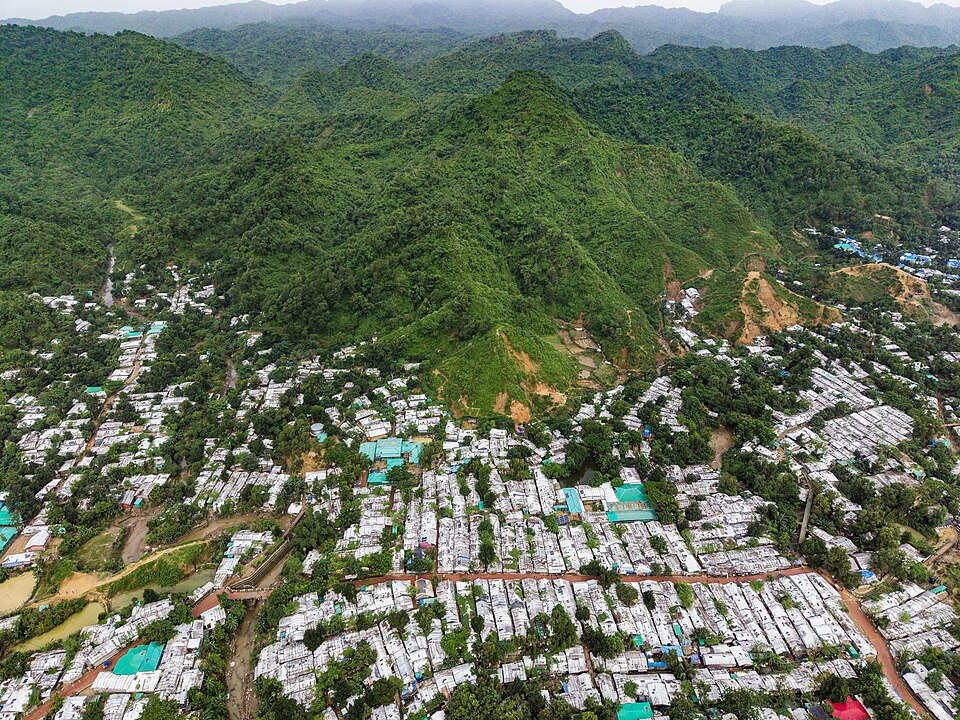
The Gambia initiated proceedings against Myanmar in 2019, alleging violations of the Genocide Convention in relation to the Rohingya, a predominantly Muslim minority subjected to decades of persecution.
The case focuses particularly on the Myanmar military's 2016 and 2017 “clearance operations” in Rakhine State. Those operations involved mass killings, widespread sexual violence, village destruction and the displacement of more than 700,000 Rohingya into neighbouring Bangladesh.
Myanmar has denied genocidal intent, characterising the operations as a response to attacks by the Arakan Rohingya Salvation Army and arguing that the evidence may establish serious violations without proving genocide.
In January 2020, the ICJ ordered provisional measures requiring Myanmar to take steps to prevent genocidal acts, preserve relevant evidence and report on its implementation. The Court later rejected Myanmar's preliminary objections and confirmed that it had jurisdiction to hear the case.
Public hearings on the merits were held from 12 to 29 January 2026. The proceedings included two rounds of oral argument, witnesses and expert evidence. At the conclusion of the hearings, the Court began its deliberations. Its judgment will be delivered at a date still to be announced.
This is a significant moment in the development of genocide law. The Court is no longer considering only whether protected rights may plausibly be at risk while proceedings continue. It must now determine whether Myanmar bears state responsibility for violations of the Genocide Convention.
That requires a much fuller examination of evidence, attribution and intent.
The Battle Over Genocidal Intent
The central dispute in The Gambia v. Myanmar concerns what can legitimately be inferred from a pattern of conduct.
Direct written orders to destroy a group are rare. States and military institutions do not ordinarily produce explicit documents announcing a genocidal plan. Intent must therefore often be inferred from conduct, including the scale and systematic nature of violence, the selection of victims, the treatment of children, sexual violence, the destruction of homes, dehumanising rhetoric and the repetition of similar acts across multiple locations.
The Gambia argues that the coordinated nature and extreme brutality of the operations against the Rohingya make genocidal intent the only reasonable conclusion.
Myanmar argues that even grave atrocities do not satisfy the Convention unless the evidence establishes the required intent with sufficient certainty. It contends that counterterrorism, forced displacement, ethnic persecution or other criminal objectives may explain the conduct without proving an intention to destroy the group physically.
The disagreement exposes the central difficulty of genocide litigation. If the standard for inferring intent is too rigid, a state may escape responsibility whenever it avoids creating direct evidence of its objective. If the standard becomes too flexible, genocide risks being inferred primarily from the severity of consequences rather than proved as a distinct legal intention.
The Court's earlier jurisprudence has generally required great caution. In the Bosnia and Croatia genocide cases, it held that when genocidal intent is inferred from a pattern of conduct, that intent must be the only reasonable inference available from the evidence.
The Myanmar judgment may clarify how this principle operates when evidence includes survivor testimony, satellite imagery, UN fact-finding reports, patterns of sexual violence, official statements and disputed military explanations.
It is that clarification—not a simplistic comparison between conflicts—that may matter for Israel.
South Africa v. Israel
South Africa filed proceedings against Israel in December 2023, alleging violations of the Genocide Convention in connection with Israel's military operations in Gaza following the Hamas-led attacks of 7 October 2023.
Israel rejects the accusation. It argues that its objective is to dismantle Hamas, recover hostages and prevent further attacks—not to destroy the Palestinian population. It also maintains that civilian harm must be assessed within the context of urban warfare against an armed organisation operating among civilian infrastructure.
South Africa argues that the scale of death, destruction, displacement, deprivation and restrictions affecting civilian life, considered alongside statements by Israeli officials, demonstrates genocidal conduct and intent.
In 2024, the ICJ issued several sets of provisional measures. These required Israel, among other obligations, to take measures within its power to prevent acts prohibited by the Genocide Convention, prevent and punish direct and public incitement to genocide, enable urgently needed humanitarian assistance, preserve evidence and submit reports to the Court.
These orders are legally binding. But they are not a final judgment that Israel committed genocide.
At the provisional-measures stage, the Court does not decide the merits of the case. It considers whether it has prima facie jurisdiction, whether the rights asserted are plausible, whether there is a link between those rights and the measures requested, and whether there is a real and imminent risk of irreparable prejudice before the case can be decided.
This distinction has repeatedly disappeared from political communication.
Headlines and public figures have claimed that the ICJ found genocide to be “plausible.” More sweeping versions assert that the Court already ruled that Israel was committing genocide. That is not what the provisional-measures orders decided.
The Court recognised that Palestinians in Gaza possess plausible rights under the Genocide Convention and ordered protective measures while the case proceeds. It did not determine that South Africa had proved genocidal intent or that Israel was legally responsible for genocide.
That judgment lies years ahead.
Israel filed its written response in March 2026. In May 2026, the Court set 22 November 2027 as the deadline for South Africa's Reply and 22 May 2029 for Israel's Rejoinder. A final merits hearing and judgment will follow only after the written phase is completed, unless the procedural calendar changes.
Meanwhile, states including Namibia, the United States, Hungary and Fiji have filed declarations of intervention concerning the interpretation of the Genocide Convention. Their positions demonstrate that the case is not only about the facts of Gaza. It is also becoming a contest over the future meaning of genocide law.
What the Myanmar Judgment Could Change
The judgment in The Gambia v. Myanmar will not determine the outcome of South Africa v. Israel. The factual contexts, actors, evidence and military circumstances differ substantially.
Myanmar's operations concerned a long-persecuted minority whose citizenship had been denied, whose villages were destroyed and whose population was driven across an international border during a concentrated campaign. The Gaza case concerns a war triggered by the 7 October attacks, fought between a state and an organised armed group embedded within a densely populated territory, amid hostage-taking, rocket fire, military operations and catastrophic civilian suffering.
Recognising these differences does not decide either case. It simply prevents legal analogy from becoming a substitute for factual analysis.
Nevertheless, the Myanmar judgment may shape several questions relevant to future genocide litigation.
First, it may clarify how strictly the Court applies the “only reasonable inference” test when genocidal intent is inferred from conduct.
Second, it may explain how the Court weighs findings produced by UN mechanisms against contested state evidence, witness testimony and alternative explanations.
Third, it may address whether a claimed security or counterterrorism objective can coexist with genocidal intent. A legitimate military objective cannot excuse genocide, but the existence of an alternative objective may affect whether genocidal intent has been proved.
Fourth, the judgment may clarify how statements by political and military officials contribute to establishing state intent. Not every inflammatory statement represents official policy. Yet repeated statements by individuals exercising authority may become significant when evaluated alongside operational conduct.
Fifth, it may influence how causation and attribution are assessed: which acts can be legally attributed to the state, what level of institutional coordination must be demonstrated and whether failures to prevent or punish can generate responsibility independently of direct commission.
These questions will matter far beyond Myanmar and Israel. They will affect how the Convention is applied to future conflicts and how readily states use genocide proceedings as instruments of international accountability—or political pressure.
The Danger of Converting Protection into Conviction
Provisional measures serve a vital function. International litigation takes years, while threatened populations may not have years to wait. Courts must be able to order urgent protection before the entire evidentiary record has been tested.
The problem is not the existence of provisional measures. The problem is how they are represented outside the courtroom.
When political actors describe an interim order as a final determination, they transform a mechanism of protection into a declaration of guilt. This can damage the rights of the accused state, distort public understanding and place pressure on the Court to validate conclusions already embedded in political discourse.
It can also harm victims. If every provisional order is portrayed as a completed genocide judgment, any later decision applying a more demanding standard may be interpreted as political retreat rather than the predictable result of a different procedural stage.
The distinction between prevention and adjudication must therefore be defended.
States have an obligation to prevent genocide before proof reaches the threshold required for a final judgment. But the duty to act preventively does not authorise governments, media organisations or international institutions to misrepresent what a court has decided.
Urgency and accuracy are not enemies.
Genocide as Law and Genocide as Political Language
The word genocide carries incomparable moral force. That is precisely why political actors seek to claim it.
For victims, recognition of genocide can provide dignity, historical acknowledgment and a pathway toward reparations. For governments, the accusation can delegitimise an adversary, mobilise international pressure, justify sanctions and reshape diplomatic alliances. For advocacy organisations, it can generate attention that less dramatic legal categories may not attract.
These incentives do not make an allegation false. They do, however, make legal discipline indispensable.
There is a danger in treating caution as indifference. Demanding proof of genocidal intent does not excuse mass killing, starvation, forced displacement or attacks on civilians. Conduct that fails to meet the genocide threshold may still constitute war crimes, crimes against humanity or other grave violations carrying serious legal consequences.
The choice is not between genocide and innocence.
International law contains multiple categories precisely because atrocities differ in structure, intent and responsibility. Protecting those distinctions strengthens accountability by ensuring that findings correspond to evidence rather than political necessity.
A Test for International Justice
The forthcoming Myanmar judgment will test whether international justice can respond to mass atrocity without weakening the legal threshold that gives genocide its distinctive meaning.
If the Court finds Myanmar responsible, it must explain clearly how the evidence establishes genocidal intent and why alternative inferences do not reasonably account for the pattern of conduct. If it does not find responsibility for genocide, it must communicate that conclusion without erasing the documented suffering of the Rohingya or implying that other international crimes did not occur.
The same discipline will eventually be required in South Africa v. Israel.
Israel must be judged according to the evidence, the Genocide Convention and the applicable standard of proof—not according to its supporters' insistence that genocide is impossible, nor according to its opponents' declaration that the case has already been decided.
The integrity of genocide law depends upon resisting both forms of predetermined judgment.
Conclusion: The Verdict Must Follow the Evidence
The prohibition of genocide represents one of the most solemn commitments in international law. It obliges states not only to punish genocide after it occurs, but to act when a serious risk emerges.
That preventive responsibility is essential. Yet prevention, provisional protection and final adjudication remain legally distinct.
The Gambia v. Myanmar has reached the stage at which the ICJ must evaluate the full record and determine state responsibility. South Africa v. Israel has not. Its provisional measures remain binding, but its central allegation remains unproven in court.
The eventual Myanmar judgment may shape how genocidal intent is inferred, how UN investigations are evaluated and how alternative military or political objectives are treated. It may influence future arguments concerning Gaza. But it should not be converted into an automatic template for a conflict with a different history and evidentiary record.
International justice loses credibility when it responds too slowly to atrocity. It also loses credibility when allegations are treated as judgments before evidence has been fully tested.
The law must be capable of protecting populations in immediate danger while preserving the discipline necessary for a final determination.
Because when the most serious accusation in international law becomes a verdict before the judges have ruled, justice risks becoming another instrument of political power.
Sources and Further Reading
• United Nations, Convention on the Prevention and Punishment of the Crime of Genocide
• International Court of Justice, The Gambia v. Myanmar, case materials and procedural history
• Independent Investigative Mechanism for Myanmar, overview of The Gambia v. Myanmar
• International Court of Justice, South Africa v. Israel, case materials and procedural history
• International Court of Justice, provisional measures in South Africa v. Israel
• International Court of Justice, orders in South Africa v. Israel
• International Court of Justice, declarations of intervention in South Africa v. Israel
• South African Presidency, procedural timetable established by the ICJ in May 2026
Raw Truth Media | Global Power & Institutions
Editorial note: This article distinguishes allegations, provisional measures and final judicial determinations. It does not make an independent finding that genocide has or has not occurred in either case.



Leave a Reply