

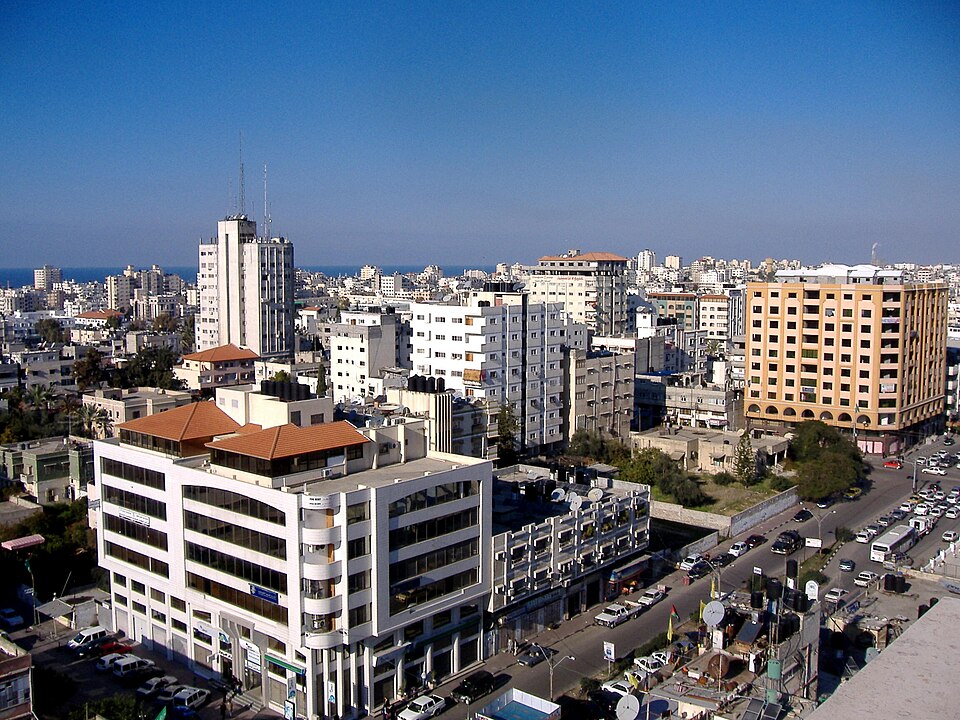
Featured image: Archive view of Gaza City, 23 December 2007. Photo: OneArmedMan / Wikimedia Commons, Public domain. Resized.
The removal of an armed regime is a military objective. Replacing it with legitimate, capable and accountable government is a far more difficult political and developmental undertaking.
Debates about the future of Gaza frequently begin with the phrase “the day after Hamas.” It is a useful expression, but also a deceptive one. It suggests that the end of Hamas’s rule would create a clearly defined political moment in which a new authority could assume control, public institutions could be restored and reconstruction could begin. In reality, the removal of Hamas would resolve only one part of a considerably larger problem.
Governing Gaza would require far more than appointing a new administration. Any successor would need to establish public order, prevent the reconstruction of terrorist infrastructure, manage borders and humanitarian assistance, restore essential services, rebuild institutions and persuade a deeply traumatised population that it possesses both the authority and capacity to govern. It would also have to gain a minimum level of acceptance from Israel, Arab governments and international donors while avoiding the appearance of having been imposed exclusively by external powers.
The Palestinian Authority is frequently presented as the most plausible Palestinian institution capable of assuming this role. It possesses ministries, a civil service, security forces, diplomatic recognition and decades of experience administering parts of the West Bank. It is also connected to the Palestine Liberation Organization and to the political framework established by the Oslo Accords.
Yet formal recognition and bureaucratic survival are not synonymous with legitimate governance. The central question is therefore not whether the Palestinian Authority exists, but whether it is institutionally, politically and financially capable of governing Gaza after Hamas.
A recent report published by the Jerusalem Institute of Justice addresses this question directly. It concludes that the Palestinian Authority cannot credibly assume responsibility for Gaza without extensive and verifiable reform, particularly in relation to political leadership, public institutions, education and payments connected to terrorism.
Although the report reflects a clearly pro-Israel institutional perspective, the questions it raises cannot be dismissed as Israeli objections alone. They concern the foundations upon which any durable system of postwar governance would have to be constructed.
From the Oslo framework to Palestinian division
The Palestinian Authority was created during the 1990s as part of the Oslo process. It was intended to function as an interim Palestinian governing institution with limited jurisdiction in parts of the West Bank and Gaza pending negotiations over a permanent settlement.
Its establishment created ministries, municipal structures, security services and a large public-sector workforce. International donors invested heavily in building Palestinian administrative capacity, while the Authority assumed responsibility for areas including education, healthcare and local government.
The institutional framework was always politically fragile. It depended upon cooperation among Palestinian leaders, Israel and international donors, while the most difficult questions concerning borders, security, Jerusalem, refugees and sovereignty remained unresolved.
That fragility became more pronounced following the 2006 Palestinian legislative elections, which were won by Hamas. Tensions between Hamas and Fatah escalated into violent confrontation, culminating in Hamas’s seizure of Gaza in 2007. From that point onward, the Palestinian political system was divided between Hamas rule in Gaza and a Fatah-dominated Palestinian Authority governing parts of the West Bank.
The division was not merely geographical. It produced separate security systems, administrative structures and political interests. Repeated efforts at Palestinian reconciliation failed to create a durable unified government. Hamas developed Gaza as both a territorial base and a platform for armed confrontation with Israel, while the Palestinian Authority continued to depend on international recognition, external financial support and security coordination.
Consequently, returning the Palestinian Authority to Gaza would not represent a simple restoration of the situation that existed before 2007. It would require the Authority to enter a territory from which it was violently expelled and in which Hamas subsequently embedded itself within political, military, social and economic institutions.
Administrative capacity without political legitimacy
The strongest argument in favour of a Palestinian Authority role is institutional continuity. Unlike a newly created governing body, the PA already possesses ministries, civil servants, diplomatic relationships and experience in delivering public services. It maintains schools, hospitals, taxation mechanisms and security services in areas under its administration.
These capacities matter. Postwar governance cannot be improvised entirely through humanitarian agencies or foreign advisers. Gaza would require Palestinian administrators capable of managing local institutions, communicating with the population and coordinating with international partners.
Nevertheless, administrative capacity must be distinguished from political legitimacy. The Palestinian Authority has not conducted a national presidential election since 2005 or legislative elections since 2006. Mahmoud Abbas’s original presidential mandate expired many years ago, yet he has remained in office without a renewed electoral mandate. Planned elections have repeatedly been postponed or cancelled.
The absence of elections does not automatically mean that every PA institution is incapable of functioning. It does, however, create a profound legitimacy problem. A government that has not subjected itself to meaningful electoral accountability cannot easily claim a democratic mandate to assume responsibility for more than two million people in Gaza.
The difficulty is intensified by perceptions of corruption, patronage and political repression. Critics of the Palestinian Authority include not only Israelis, but Palestinian journalists, human-rights organisations and political activists. Allegations concerning arbitrary detention, mistreatment in custody and the suppression of dissent have weakened the PA’s claim to represent a democratic alternative to Hamas.
The choice facing Palestinians should not be reduced to a false alternative between religious authoritarianism under Hamas and secular authoritarianism under an unreformed Palestinian Authority. Removing Hamas’s military control without creating accountable political institutions would replace one form of coercive governance with another.
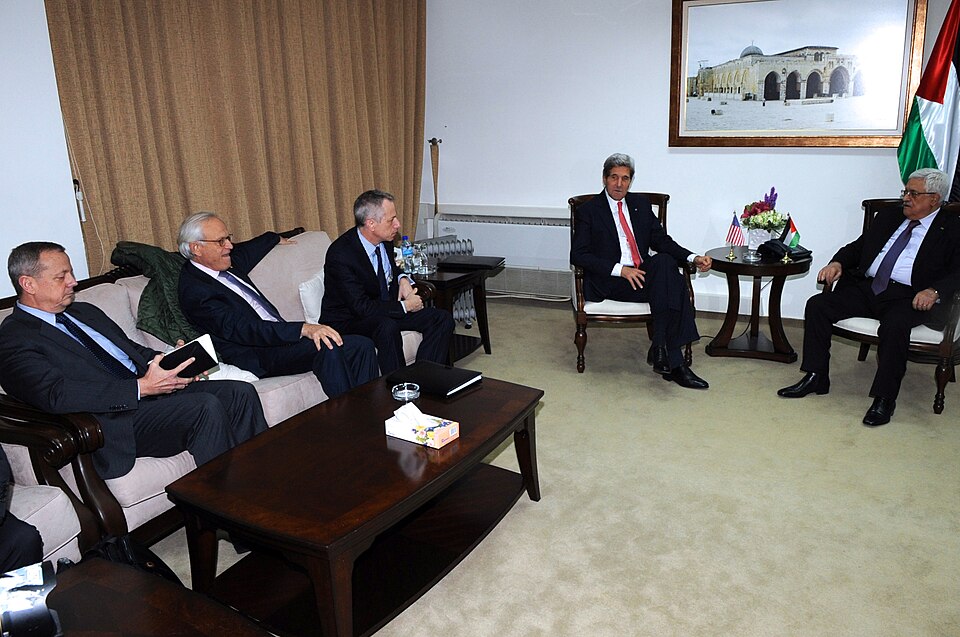
The monopoly on legitimate force
Any functioning government must exercise effective control over armed force within its territory. This principle is especially important in Gaza, where reconstruction would be impossible if Hamas or other armed organisations retained independent military structures.
A post-Hamas governing authority would therefore need to prevent the re-emergence of rocket production, weapons smuggling, tunnel networks and armed units operating outside civilian command. It would also need to protect humanitarian supplies and reconstruction materials from diversion by terrorist organisations or criminal groups.
The Palestinian Authority maintains security forces in the West Bank and has participated in security coordination with Israel. This experience gives it an institutional advantage over entirely new alternatives. At the same time, the deployment of PA security forces in Gaza would present enormous political and operational challenges.
If those forces entered Gaza behind an Israeli military operation, they could be portrayed as agents of Israel rather than representatives of the Palestinian population. If Israel withdrew before a capable replacement system had been established, Hamas or other armed organisations could exploit the resulting vacuum. If international or Arab security forces were introduced, their mandate, rules of engagement and relationship with Palestinian authorities would require careful definition.
The problem cannot be solved simply by replacing uniforms. Security reform would need to establish a professional chain of command, civilian oversight and mechanisms preventing political factions from maintaining their own armed wings.
Demilitarisation would therefore have to be treated not as a temporary Israeli demand, but as a foundational condition for Palestinian institutional recovery. No administration can exercise meaningful sovereignty while allowing a separate organisation to decide when to initiate war.
The question of terror-linked payments
One of the most politically sensitive barriers to international confidence in the Palestinian Authority concerns its system of payments to prisoners, former prisoners and the families of Palestinians killed or injured in the conflict.
Palestinian officials and supporters have described these payments as a form of social welfare intended to support families that have lost an income. Israel and other critics argue that the system has rewarded participation in terrorism because payments have historically been connected to factors including the length of imprisonment, which can reflect the seriousness of the offence.
The JIJ report identifies the elimination of what it describes as the “Pay-for-Slay” system as a necessary condition for any credible PA role in Gaza. The terminology is politically charged, but the underlying policy problem is substantial. A future governing authority cannot credibly present itself as committed to peaceful administration while maintaining financial structures perceived as rewarding violence against Israeli civilians.
Reform must be more than cosmetic. Renaming a payment mechanism or transferring its administration to another body would not resolve the issue if the eligibility criteria continued to reward involvement in terrorism. A defensible welfare system would have to be based upon demonstrable socioeconomic need rather than the status or actions of an imprisoned individual.
This is not a demand that Palestinian families be abandoned. It is a requirement that social assistance be separated from the political glorification of violence.
Education as a question of governance
Postwar reconstruction is often discussed in material terms: homes, hospitals, roads, water systems and electricity networks. Yet reconstruction also has an educational and institutional dimension.
Schools do more than deliver technical knowledge. They influence how future generations understand citizenship, history, political authority and relations with neighbouring communities. If an educational system normalises antisemitism, glorifies martyrdom or presents the elimination of Israel as a legitimate national objective, physical reconstruction alone cannot create long-term stability.
The JIJ report therefore identifies educational reform as another essential test of Palestinian Authority credibility. This issue requires careful analysis because education in conflict societies inevitably contains national narratives, memories of suffering and contested interpretations of history. Demanding that Palestinians abandon their identity or political aspirations would be neither realistic nor legitimate.
The relevant distinction is between teaching a national narrative and encouraging violence. Palestinian students can learn about their history and political claims without being taught that Israeli civilians are legitimate targets or that Jews possess no historical relationship with the land. Similarly, Israeli education should remain open to critical examination of Palestinian experience without surrendering the legitimacy of Jewish national self-determination.
Educational reform should not be treated as the imposition of an Israeli historical narrative. It should be understood as a necessary component of building institutions capable of resolving political conflict without reproducing it indefinitely.
Fiscal dependence and institutional vulnerability
The Palestinian Authority’s governing capacity is also constrained by a persistent fiscal crisis. Its finances depend heavily upon international assistance and upon clearance revenues collected by Israel on its behalf under existing agreements. Disputes over transfers, deductions and Palestinian payment policies have repeatedly left the Authority unable to meet its obligations consistently.
A governing body struggling to pay employees and maintain services in the West Bank would face a vastly greater challenge in Gaza. Reconstruction would require enormous financial resources over many years, accompanied by transparent procurement, independent auditing and safeguards against corruption and diversion.
International donors have demonstrated a willingness to support a reformed Palestinian Authority. In 2025, the European Union announced a multiyear support programme worth up to approximately €1.6 billion, combining direct financial assistance, development projects and support for private-sector recovery. The programme was explicitly connected to reforms concerning democratic governance, financial sustainability and public administration. Associated Press coverage of the EU programme
Such support demonstrates that the international community continues to view the PA as a potentially important institution. It also reveals the extent of the Authority’s dependency. An administration whose survival relies upon external funding may possess bureaucratic structures without having established genuine institutional resilience.
Funding reconstruction without reform would risk reproducing earlier failures. Donor states cannot reasonably invest vast resources while tolerating corruption, incitement or the diversion of civilian infrastructure for military purposes. At the same time, reform requirements must be realistic, transparent and connected to measurable institutional outcomes rather than vague political promises.
Could a technocratic administration provide an alternative?
One frequently proposed solution is the establishment of a temporary Palestinian technocratic committee composed of professionals rather than established political figures. Such an administration could focus upon public services and reconstruction while avoiding immediate control by either Hamas or the existing PA leadership.
Technocratic government has obvious appeal. Engineers, economists, doctors and administrators may be better positioned than factional politicians to restore essential services. A temporary committee could also receive assistance from Arab governments, international financial institutions and Palestinian professionals from the diaspora.
Yet technocracy cannot remove politics from governance. Decisions about security, taxation, education, land, reconstruction priorities and relations with Israel are inherently political. Experts may administer policy, but they still require a legal mandate, public acceptance and protection from armed coercion.
A technocratic committee could therefore form part of a transitional arrangement, but it could not substitute indefinitely for legitimate political institutions. Without a recognised source of authority and an eventual path towards accountable Palestinian government, it would risk becoming another externally financed administration with little power over the forces determining Gaza’s future.
The role of Arab states and international institutions
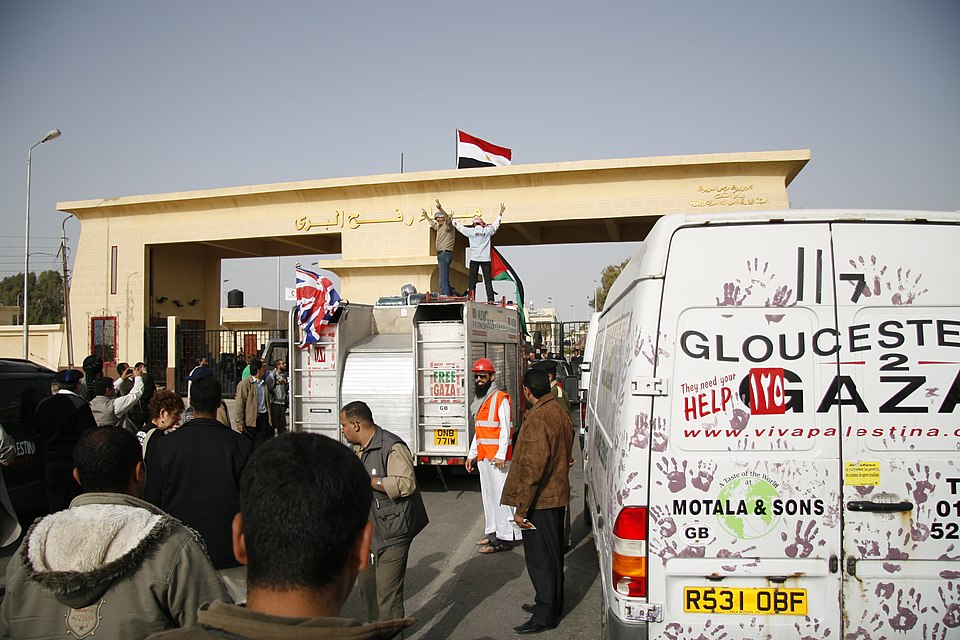
Arab participation would be essential to any viable transition. Egypt has direct security interests in Gaza and controls access through its side of the Rafah crossing. Jordan possesses extensive experience with Palestinian political affairs and a strong interest in regional stability. Gulf states have the financial capacity to support reconstruction, while countries such as the United Arab Emirates may contribute administrative and development expertise.
However, Arab governments are unlikely to finance reconstruction without credible guarantees that Gaza will not return to Hamas control or be destroyed in another war. Nor are they likely to accept indefinite responsibility for a territory whose political status remains unresolved.
International institutions could assist with humanitarian coordination, financial oversight, infrastructure and electoral preparation. Their role should nevertheless be defined carefully. The failures and controversies surrounding existing international involvement in Gaza demonstrate that external organisations cannot be assumed to operate effectively merely because they possess international legitimacy.
Reconstruction would require rigorous monitoring capable of ensuring that resources reach civilians and do not restore terrorist capabilities. Accountability should apply equally to Palestinian authorities, international agencies, contractors and donor governments.
Israel’s unavoidable role
No post-Hamas governance arrangement can succeed without addressing Israel’s security requirements. Israel cannot reasonably be expected to accept an administration that allows Hamas to reconstruct its military capabilities, retains institutional incentives connected to terrorism or refuses effective security coordination.
At the same time, permanent Israeli civil administration of Gaza would impose enormous military, financial and political costs. Israel withdrew its permanent military installations and settlements from Gaza in 2005, and the experience that followed profoundly shaped Israeli public distrust. The Hamas takeover, continuing rocket attacks and the atrocities of 7 October demonstrated that territorial withdrawal alone could not produce security.
Israel therefore faces a difficult balance. It has a legitimate interest in preventing Gaza from again becoming a base for mass terrorism, but security control without a credible political and administrative strategy risks creating prolonged instability and continuous responsibility for civilian governance.
A viable arrangement would require clear distinctions between temporary security measures, Palestinian civil administration and the long-term political future of the territory. Ambiguity may offer short-term flexibility, but it cannot provide durable governance.
Recognition is not governance
The Palestinian Authority is often treated as the default alternative because no other Palestinian institution possesses comparable international recognition and administrative infrastructure. This makes it relevant, but not automatically ready.
A credible role in Gaza would require far-reaching reform. Political leadership would need renewal. Public finances would require independent oversight. Security forces would have to operate under unified civilian command. Welfare payments would need to be separated from participation in terrorism. Education would have to reject the glorification of violence. Civil liberties and political opposition would require meaningful protection.
These reforms should not be considered concessions made only for Israel’s benefit. Palestinians themselves require institutions that are accountable, financially responsible and capable of protecting them from both terrorist organisations and arbitrary government.
The future of Gaza cannot be built upon the assumption that any authority opposing Hamas is therefore legitimate. Nor can it be built upon the idea that international recognition can compensate for the absence of public confidence, institutional integrity or democratic accountability.
The central lesson is that reconstruction and governance cannot be separated. Rebuilding physical infrastructure while leaving authoritarianism, armed factionalism and educational incitement untouched would prepare the conditions for another cycle of conflict.
Hamas’s removal would create an opportunity, not a functioning political order. The Palestinian Authority may possess some of the institutions required to participate in that order, but participation must be conditional upon verifiable transformation.
The question is therefore not simply who could govern Gaza after Hamas. It is what kind of governance Palestinians and Israelis would need in order to prevent Hamas — or an organisation like it — from emerging again.
Recognition alone is not government. Administration alone is not legitimacy. Reconstruction alone is not peace.



Leave a Reply