

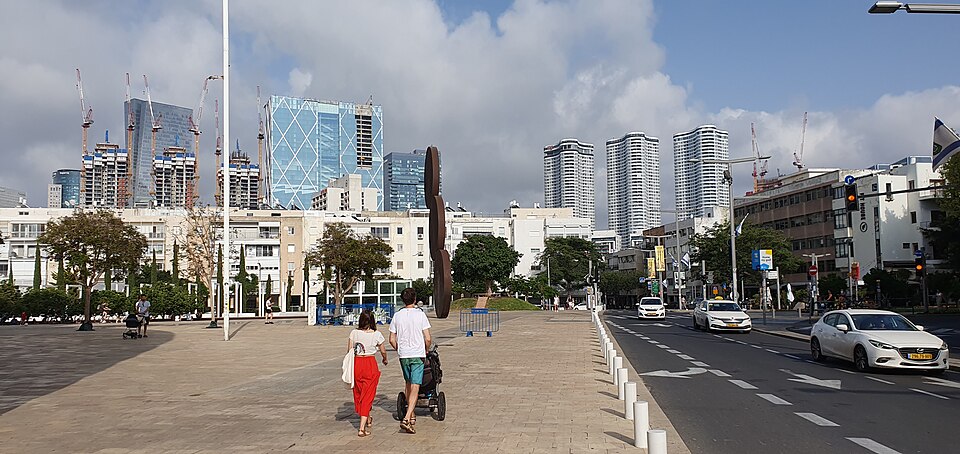
Featured image: Tel Aviv’s skyline seen from Habima Square, 17 June 2023 (file photo). Photo: Yair Haklai / Wikimedia Commons, CC BY-SA 4.0. Resized. Thumbnail crops are also licensed under CC BY-SA 4.0.
Israel’s economy has repeatedly demonstrated an exceptional capacity to absorb military and geopolitical shocks. Yet resilience should not be confused with immunity. Prolonged conflict is reshaping the country’s public finances, labour market, investment climate and development priorities.
Israel’s economy occupies an unusual position in the international system. It combines the characteristics of an advanced, innovation-driven economy with the security pressures of a state located in one of the world’s most unstable regions. Its technology sector, research institutions, highly educated workforce and integration into global financial markets have allowed it to achieve levels of productivity and investment that distinguish it from most neighbouring economies. At the same time, Israel must maintain extensive military capabilities, protect critical infrastructure and prepare continuously for the possibility of conflict on several fronts.
Since the Hamas-led attacks of 7 October 2023, this tension between economic dynamism and permanent insecurity has become considerably more visible. The war that followed was not confined to Gaza. Israel faced sustained threats from Hezbollah in Lebanon, attacks connected to the Iranian regional network, disruption in the Red Sea and escalating confrontation with Iran itself. These events affected economic activity not only through direct physical damage but also through military mobilisation, business interruption, reduced tourism, higher public expenditure and greater uncertainty.
The result is an economy that continues to function and innovate while carrying an increasingly substantial security burden.
Resilience Is Real, but It Is Not Costless
Israel has passed through previous wars, waves of terrorism, global recessions and periods of diplomatic isolation without experiencing economic collapse. This record has created a justified perception of resilience. Businesses are accustomed to contingency planning, state institutions have experience responding to emergencies and a significant proportion of economic activity is concentrated in sectors capable of operating internationally even when domestic conditions deteriorate.
The technology sector plays a particularly important role in this resilience. Software, cybersecurity, defence technology, medical innovation and research-intensive industries are less dependent on Israel’s physical geography than manufacturing, construction or tourism. A technology company in Tel Aviv or Jerusalem can continue selling services in North America, Europe or Asia even when regional transport networks are under pressure. International demand for Israeli expertise, especially in cybersecurity and defence-related technologies, may even increase during periods of insecurity.
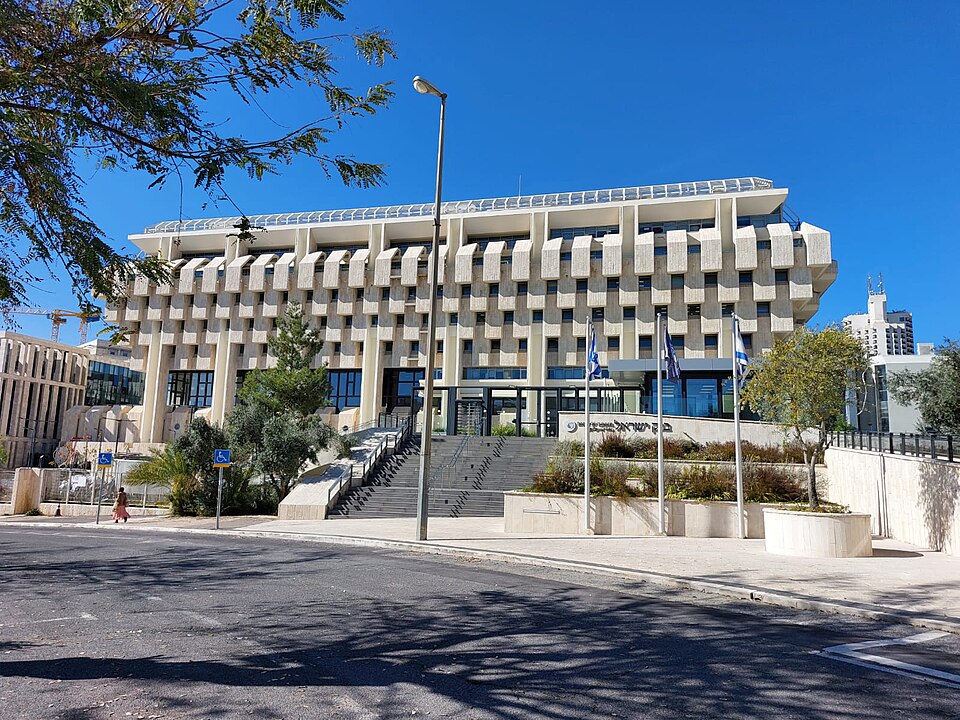
Israel also benefits from an experienced central bank, developed financial markets, substantial foreign-currency reserves and a currency capable of adjusting to changing conditions. These institutions cannot eliminate the consequences of war, but they provide the government and financial system with mechanisms for managing liquidity, inflation and market volatility.
Nevertheless, resilience can become a misleading concept when it is treated as evidence that conflict carries no lasting economic price. An economy may continue growing while accumulating public debt, postponing infrastructure projects, losing tourism income and placing unsustainable pressure on parts of its workforce. National economic indicators can therefore remain relatively stable even while particular communities, industries and households experience severe disruption.
The International Monetary Fund’s July 2026 assessment illustrates this distinction. The IMF recognised Israel’s capacity to withstand extraordinary pressures but reduced its forecast for 2026 economic growth from 4.8 per cent to 3.5 per cent following renewed regional conflict. It also warned that higher energy prices, supply constraints, fiscal pressures and longstanding labour-market weaknesses were affecting the medium-term outlook.
This revision does not describe an economy approaching failure. It describes an advanced economy performing below its potential because resources that might otherwise support investment and civilian development are being redirected towards managing insecurity.
The Changing Fiscal Equation
The most immediate economic consequence of prolonged conflict is the expansion of public expenditure. Modern warfare requires not only weapons and military personnel but also air defence, intelligence, logistics, civil protection, emergency accommodation, reconstruction and compensation for affected businesses and households.
Israel must finance these costs while continuing to fund healthcare, education, welfare, transport and local government. This creates a difficult fiscal balance. Security spending cannot simply be suspended when threats are active, yet cutting productive civilian investment can weaken the foundations of future economic growth.
The IMF reported that Israel’s draft 2026 budget anticipated a central-government deficit of approximately 3.9 per cent of gross domestic product, following a deficit of 4.7 per cent in 2025. The projected improvement depended partly on lower defence expenditure, demonstrating how sensitive fiscal consolidation remains to security developments.
If hostilities continue or intensify, the state may face a choice between higher taxes, greater borrowing and reductions in other areas of expenditure. Each option has consequences. Higher taxation can weaken private consumption and business investment. Additional borrowing raises debt-servicing costs and reduces the government’s capacity to respond to future crises. Reductions in civilian expenditure can affect education, healthcare, housing and infrastructure, producing costs that may only become visible years later.
This is why the economic cost of war cannot be calculated exclusively through the defence budget. The more significant long-term cost may be the development that does not occur: a railway that is delayed, a hospital that remains understaffed, a school system that does not receive the required investment or a regional development programme that is postponed.
For Israel, maintaining fiscal credibility is itself a component of national security. A state facing persistent external threats requires the ability to raise funds on reasonable terms and to respond rapidly to emergencies. Rebuilding fiscal buffers is therefore not an abstract demand for austerity. It is part of ensuring that Israel retains the financial capacity to defend itself during the next crisis.
Military Mobilisation and the Labour Market
Israel’s reserve system is essential to its defence, but prolonged mobilisation carries an economic price that is difficult to measure precisely. Reservists are also engineers, physicians, teachers, entrepreneurs, construction workers and small-business owners. When they are mobilised for extended periods, their absence affects workplaces, families and local economies.
The impact is particularly significant for small and medium-sized enterprises. A large company may be able to redistribute responsibilities when employees are called to military service. A small firm may depend on one manager, technician or specialist whose absence immediately reduces its ability to operate. Self-employed reservists face an even more direct connection between military service and lost income.
The technology sector is not protected from this pressure. Its international orientation makes it economically resilient, but many of its employees serve in reserve units. Extended mobilisation can delay product development, investment negotiations and expansion plans. It can also place additional pressure on employees who remain in civilian positions while colleagues are absent.
Other sectors face different labour constraints. Construction and agriculture have traditionally relied partly on Palestinian and foreign workers. Restrictions introduced for security reasons can therefore create serious shortages, delay housing projects and increase production costs. Replacing these workers is neither immediate nor inexpensive because recruitment, training, accommodation and regulatory approval all require time.
The IMF has identified labour supply constraints arising from military mobilisation and the reduced availability of non-Israeli workers as continuing challenges for the economy. It has also pointed to deeper structural issues, including comparatively low labour-force participation among ultra-Orthodox men and Arab women.
These questions are politically sensitive, but economically unavoidable. A country with Israel’s defence obligations needs the broadest possible participation in productive employment. Improving education, professional training, childcare provision and access to employment in underserved communities would strengthen growth while distributing the economic burden more widely.
Tourism, Jerusalem and the Local Economy
The contrast between national resilience and local vulnerability is particularly visible in tourism. Israel’s technology companies can often continue serving foreign markets during a security crisis. Hotels, tour guides, restaurants, transport providers and religious souvenir businesses cannot transfer their operations abroad.
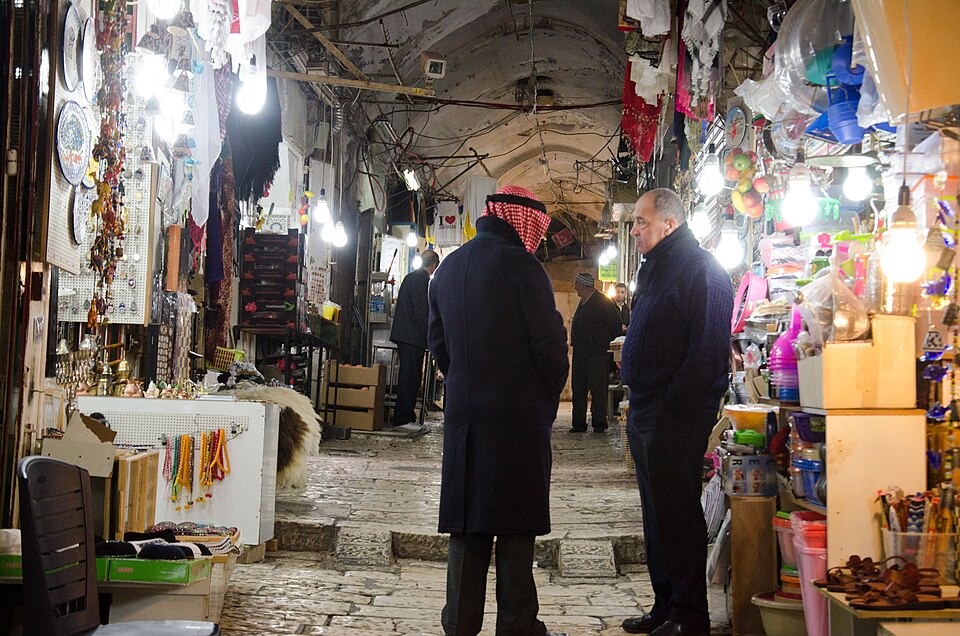
Jerusalem is especially exposed because tourism and pilgrimage connect numerous parts of its economy. The decline of international visitors affects far more than major hotels. It reaches family businesses in the Old City, Christian institutions that operate guesthouses, Palestinian and Israeli tour operators, taxi drivers, restaurants and craftspeople.
For Christian communities, this is also a question of institutional sustainability. Pilgrimage contributes to the income of churches, monasteries, schools, charitable organisations and local families. When visitors disappear, religious institutions may continue providing social and educational services even as the income supporting those activities declines.
The economic consequences therefore extend beyond conventional tourism statistics. A prolonged reduction in pilgrimage can weaken the social infrastructure that helps maintain Jerusalem’s Christian presence. This is not necessarily the result of direct persecution or a single government policy. It can arise from the cumulative interaction of insecurity, international perceptions, travel advisories, flight cancellations and declining consumer confidence.
Restoring tourism requires more than promotional campaigns. Visitors must believe that flights will operate, insurance will remain valid and itineraries will not be interrupted by a sudden escalation. Israel can invest in marketing and infrastructure, but the full recovery of tourism ultimately depends on a credible level of regional stability.
Regional Conflict as an Economic Tax
Israel’s economic environment cannot be separated from the wider Middle East. Threats to the Strait of Hormuz, attacks affecting Red Sea navigation and instability around the Bab el-Mandeb Strait influence energy prices, shipping costs and insurance premiums across the international economy.
For Israel, these pressures act as a form of regional economic tax. Imported goods become more expensive when shipping routes are disrupted or vessels require additional insurance. Exporters face longer delivery times and higher logistics costs. Airlines may reduce services, affecting tourism and business travel. Rising oil prices contribute to inflation and increase costs for transport, agriculture and industry.
In September 2026, Reuters reported that commodity-vessel traffic through the Strait of Hormuz had fallen sharply compared with prewar levels. Brent crude remained above $100 per barrel amid continuing regional tensions and attacks on energy and transport infrastructure.
Even when Israel’s own infrastructure is not directly damaged, the country remains exposed to these external price movements. Higher energy and freight costs filter through the economy, affecting household expenses and business competitiveness. The Bank of Israel must then distinguish between temporary war-related inflation and more persistent price increases, while avoiding monetary decisions that unnecessarily suppress growth.
Regional instability therefore imposes costs at several levels simultaneously. The government spends more on security, businesses spend more on logistics and insurance, and households spend more on energy and essential goods. These effects reinforce one another.
An Unequal Distribution of Economic Pressure
The burden of war is not distributed evenly. Export-oriented technology firms may retain access to international revenues, while a restaurant in Jerusalem or a guesthouse in the Galilee loses customers immediately. Salaried employees in stable institutions may continue receiving income, while the self-employed face prolonged uncertainty. Communities evacuated from border regions experience economic disruption alongside the psychological and social effects of displacement.
Residents of Israel’s north and south have faced interruptions to education, agriculture, local commerce and family life. Even when the government provides compensation, money cannot fully replace lost business relationships, delayed schooling or the departure of skilled residents.
This unequal distribution matters from an international-development perspective because resilience depends on social cohesion as well as macroeconomic stability. If certain regions or socioeconomic groups repeatedly carry a disproportionate share of the cost, national indicators may conceal an erosion of trust and opportunity.
A credible recovery strategy should therefore protect the productive capacity of affected regions rather than merely compensate for immediate losses. Businesses need predictable mechanisms for assistance, communities require functioning schools and healthcare services, and displaced families need conditions that make permanent return economically realistic.
Investment and the Price of Uncertainty
Foreign investors distinguish between risk and uncertainty. Risk can be measured and priced. Persistent uncertainty is more difficult because businesses cannot easily determine whether a crisis will last several weeks, several years or expand into a broader regional confrontation.
Israel continues to attract investment because of its human capital, innovation ecosystem and record of producing globally competitive companies. Nevertheless, investors can delay projects, demand higher returns or move parts of their operations elsewhere when uncertainty increases. Credit-rating agencies also consider the fiscal and institutional consequences of prolonged conflict, not simply the probability of military defeat.
Moody’s projected Israeli growth of approximately 3.7 per cent for 2026, following 2.9 per cent in 2025, while warning that the security situation continued to present risks to growth and the fiscal outlook.
The first quarter of 2026 demonstrated how quickly renewed conflict can affect economic performance. Israel’s economy contracted at an annualised rate of 3.8 per cent during the quarter, with declines in consumption, government spending and exports, although fixed investment provided a partial counterweight.
The central challenge is therefore not whether Israel can attract any foreign capital during wartime. It is whether the country can preserve the depth and diversity of investment required for long-term growth. An economy dependent on a limited number of highly successful sectors may remain prosperous, but it also becomes more vulnerable if other areas such as construction, tourism, education and regional infrastructure are allowed to weaken.
Resilience as a Development Strategy
Israel’s economic performance under pressure is impressive. Few countries could sustain prolonged military mobilisation, disruption to tourism, attacks on infrastructure and regional trade instability while maintaining functioning institutions and a globally competitive technology sector.
However, resilience must be understood as a capacity that requires continuous investment. It depends on credible public finances, effective government, an independent central bank, strong education, reliable infrastructure and a workforce capable of adapting to demographic and technological change.
Security and development should not be treated as opposing priorities. Economic strength finances national defence, while national security protects economic activity. The difficulty arises when immediate security requirements consume the resources necessary to maintain future strength.
Israel therefore needs a medium-term approach that combines fiscal responsibility with continued investment in human capital and infrastructure. It must expand participation in the labour market, protect small businesses in conflict-affected areas and preserve Jerusalem’s tourism and pilgrimage economy. It must also maintain the institutional stability that gives investors confidence even when the surrounding region remains volatile.
Regional normalisation remains economically significant for the same reason. Trade and diplomatic agreements cannot eliminate ideological hostility, but they can create networks of mutual interest in transport, energy, technology and investment. The stronger these networks become, the greater the economic cost of returning to confrontation.
Israel’s economy is not resilient because war is inexpensive. It is resilient because the country has accumulated institutions, knowledge, capital and social capacity capable of absorbing extraordinary shocks. Those assets should not be taken for granted.
The central economic question is consequently not whether Israel can survive another crisis. Its recent history suggests that it can. The more important question is how much of its future development must be sacrificed to repeated emergencies, and whether resilience can be converted from a mechanism of survival into a foundation for sustained, inclusive growth.
This article reflects the author’s independent analysis of Israel’s economy and the regional environment. It does not represent any governmental, institutional or organisational position.



Leave a Reply