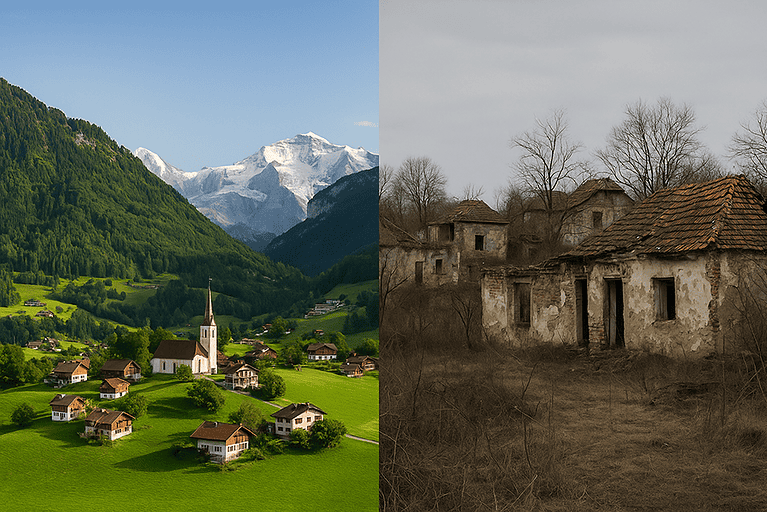
The Silent Discomfort of a Nation
Walk through Britain today and you will sense it — a quiet unease, a silent discomfort among ordinary citizens. People feel their communities are changing in ways they never voted for, and that the institutions meant to protect them have instead abandoned them.
This unease is not paranoia. It is grounded in reality: rising crime, grooming gang scandals, civil unrest simmering just beneath the surface, and the erosion of national identity. The people of Britain see it every day — in their schools, hospitals, neighbourhoods, and streets. But they are told to remain silent, to accept it all in the name of “progress” and “tolerance.”

The Unspoken Truth: Civil Unrest and Criminality
The country is not yet in open conflict, but the trajectory is unmistakable. Civil unrest has already flared in parts of England, fuelled by anger over crime and the perception that the state protects everyone except its own people. Grooming gangs, shielded for years by political correctness and fear of offending “community leaders,” remain one of the darkest stains on modern Britain.
Ordinary Britons ask themselves: how did we get here? How did a country that once prided itself on law, order, and justice, descend into a place where gangs prey on children with impunity and the authorities stand paralyzed?
Demographic Change and Identity Erasure
It is no longer a conspiracy theory to state the obvious: the ethnic British are on course to become a minority in their own country within this century. For many, this is not just about numbers — it is about culture, heritage, and identity.
Statues have been toppled, history rewritten, and traditions derided as relics of an oppressive past. This is cultural vandalism in its purest form, and it leaves ordinary citizens asking: what will remain of Britain once our heritage has been erased?
The Ideology of the Late 1990s
The roots of this crisis lie in an ideology that took power in the late 1990s. It reshaped laws, opened borders, and tied Britain into a framework that prioritised the rights of outsiders over the security of citizens.
The most controversial of these changes was the Human Rights Act of 1998. While noble in principle, it has in practice created an impossible barrier to securing borders, deporting criminals, and enforcing sovereignty. It has turned Britain into a place where foreign offenders can appeal endlessly, while communities suffer the consequences.
This law must be reviewed and reformed. National security and the rights of British citizens cannot be permanently held hostage by a system that fails to distinguish between compassion and self-destruction.
The Clash of Cultures and Religions
It must be said with clarity: multicultural and multi-religious communities can enrich a nation when integration is genuine and values are shared. Britain has benefited from communities who came, worked hard, respected the law, and contributed.
But when religious fanatics (Islamists and others) arrive with contempt for British values, when they bring violence, grooming networks, and open hostility to our culture, then multiculturalism becomes not a strength but a danger. Respecting religion is one thing; tolerating barbarism is another. Britain must learn the difference — and act accordingly.
The Economic Burden
The British taxpayer is paying a staggering price for this crisis. Billions of pounds are spent each year on migrant hotels, asylum centres, and welfare benefits for those who entered illegally. This is not sustainable.
And here lies a crucial point: the money would be better spent abroad. If the government wants to be so generous and compassionate, with the same billions, Britain could invest directly in migrants’ countries of origin — building safer communities there, strengthening infrastructure, and creating opportunities so people do not feel compelled to risk their lives crossing the Channel.
This is real compassion: helping people where they are, without undermining Britain’s security or future. The current model — importing the world’s problems while neglecting our own — is the definition of insanity.
The Rot Within: Why Radical Action Is Needed
What we face is not a series of isolated problems but a system that has rotted from within. Political leaders deflect blame, media outlets obscure reality, and legal frameworks shield the guilty rather than protect the innocent.
If this trajectory continues, the civil unrest we have already seen will intensify into something far worse. What looms ahead may be worse than civil war — not open battlefields, but a slow, grinding collapse of cohesion, identity, and trust in the system.
Radical action is needed. That means:
- Reviewing and reforming the Human Rights Act of 1998.
- Ending the use of taxpayer-funded hotels for illegal migrants.
- Fast-tracking deportations of foreign criminals.
- Investing in stability abroad instead of importing instability here.
- Protecting multicultural communities that integrate — while rejecting those who reject our laws and values.
Conclusion: Britain at the Crossroads
Britain stands at a crossroads. One path leads to continued denial, deeper cultural erosion, and unrest that will one day erupt beyond control. The other path requires courage — to speak the truth, reverse harmful policies, and put Britain’s citizens first again.
This is not about hatred, but about survival. It is about protecting a nation from being hollowed out — culturally, demographically, and politically.
Britain can remain a strong, diverse, and open society. But only if diversity is built on respect, not violence; on contribution, not dependency; on law, not barbarism.
The time for silence has passed. Radical reform is not a choice — it is a necessity. For if we fail now, the Britain we know will not survive another generation.