Introduction: Democracy in Name Only
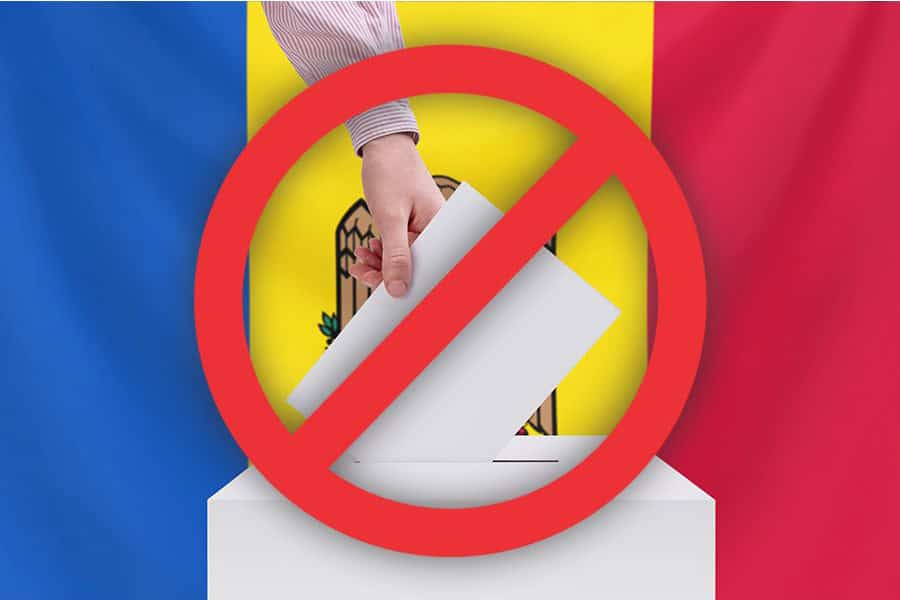
The annulment of Romania’s December 2024 elections stands as one of the most scandalous episodes in modern European politics. What should have been a democratic process reflecting the will of the people was instead overturned under the pretext of “Russian interference.” But thanks to the revelations of the Twitter Files France report, we can now see a different picture emerging. The true interference was not Russian at all—it was European. Specifically, it was the French model of state-sponsored censorship exported into Romania.
The annulled elections are not an isolated event. They are part of a broader pattern in which peripheral EU states like Romania are treated as colonies of stronger Western powers, their sovereignty sacrificed for the interests of Paris, Brussels, and Washington. The Romanian case deserves to become an international case study because it exposes the machinery of modern authoritarianism disguised as liberal democracy.
The French Blueprint: The Censorship Industrial Complex
The Civilization Works report documents how France pioneered what it calls the Censorship Industrial Complex. This system operates through government pressure on social media platforms, mediated by NGOs, “fact-checkers,” and courts that act as proxies. Instead of overt censorship, the French state created an ecosystem where dissent can be quietly silenced, narratives pre-filtered, and public opinion manipulated—all under the banner of fighting “hate speech” or “disinformation.”
This system is now embedded into the wider EU Digital Services Act, which institutionalises censorship across Europe. Romania, as a compliant follower, was a natural testing ground. When its December 2024 elections delivered results unfavourable to the establishment, this censorship machinery was activated—not to protect democracy, but to suppress it.
The False Russian Hoax
For years, Romania has been conditioned to believe that its democracy is under permanent threat from Moscow. Every protest, every surge of a populist party, every inconvenient news outlet is quickly branded “Russian-backed.” The annulled elections of 2024 followed the same script.
Authorities claimed that the results were tainted by Russian influence campaigns online. Yet, as the Twitter Files France case shows, the real digital manipulations were orchestrated by Western powers—by the very allies who proclaim themselves defenders of freedom. France’s influence was not about hacking voting machines or stuffing ballot boxes; it was about shaping the information environment so thoroughly that inconvenient outcomes could be delegitimised and discarded.
In short, the Russian interference narrative was a hoax—a convenient smokescreen to justify political control.
Romania as a Colony: The Colonial Dynamic in EU Politics
Why Romania? The answer is simple: because it could be done. Romania has long been treated as a second-class member of the EU—a source of cheap labour, a market for Western corporations, and a geopolitical pawn on NATO’s eastern flank.
When elections in a powerful state like France or Germany produce surprises, elites may panic, but the results are not annulled. But in Romania, where sovereignty is fragile and the ruling class deeply dependent on foreign approval, overturning an election becomes possible.
This colonial dynamic is reinforced by Romania’s own political elite, who act less like representatives of the Romanian people and more like local administrators for Brussels and Paris. By annulling the election, they protected their own positions within the European hierarchy while betraying the electorate at home.
The Role of Corruption and Complicit Institutions
The annulment was not just a political act; it was a judicial scandal. Courts justified the decision under the guise of protecting national security, but in reality they served the interests of those who wanted to preserve the status quo. This selective application of law reveals the deeper problem:
- Corruption is tolerated when it aligns with foreign influence.
- Justice is weaponised only against those who threaten the political order.
Romania’s annulled elections thus expose a dual corruption: the corruption of politicians willing to sell out their people, and the corruption of institutions willing to bury justice in the name of “European unity.”
Implications for International Politics
The Romanian case has profound implications beyond its borders:
- For the EU: It demonstrates that the European Union’s claim to defend democracy is hollow. If a member state’s elections can be annulled under foreign pressure, then the EU itself becomes a vehicle for authoritarianism.
- For Eastern Europe: It shows smaller nations that their sovereignty is conditional. If they elect the “wrong” leaders, those leaders will be delegitimised or removed by external power.
- For the Global South: Romania becomes a cautionary tale. The West, which lectures others about democracy, is willing to annul elections in its own backyard if the results prove inconvenient.
The War Machine Connection
Critics often argue—as one British commentator recently did—that the real problem lies with corporate corruption and the dismantling of public services, not with immigration or international meddling. But the Romanian case shows how all these layers are connected.
The annulled elections were not simply about ideology; they were about preserving Romania’s alignment with NATO’s war agenda, with EU economic dependency, and with corporate interests. The same “war machine” that fuels foreign conflicts also demands compliant governments at home. In this sense, the annulled elections are part of the same architecture of control that dismantles health services, avoids taxing the rich, and exploits labour.
Why Romania 2024 Must Become a Case Study
The annulment of Romania’s elections deserves to be studied internationally for several reasons:
- As a lesson in digital colonialism: How censorship frameworks built in Western Europe were exported to manipulate an Eastern European state.
- As a warning about democratic fragility: If elections can be annulled in Romania today, why not elsewhere tomorrow?
- As evidence of systemic corruption: Courts, media, and politicians aligning to suppress justice rather than deliver it.
- As a mirror of hypocrisy: The West cannot credibly criticise “authoritarian regimes” abroad while annulling elections within its own sphere.
Conclusion: The Hollowing of Democracy
Romania’s December 2024 elections did not fail because of Russian hackers or disinformation. They failed because foreign influence, local corruption, and judicial complicity combined to deny the people their voice.
The Twitter Files France revelations strip away the last illusions. This was not an isolated Romanian tragedy but a European scandal—one that shows how democracy is being hollowed out from within by the very powers that claim to defend it.
If ignored, Romania 2024 will not be the last annulled election in Europe. It will be the first case study in a long series of democratic betrayals to come.