Today, Romania celebrated the consecration of the People’s Salvation Cathedral — an event meant to symbolize the unity of the nation under faith, tradition, and divine blessing. Yet what unfolded inside and outside those golden gates told a very different story: one of division, hypocrisy, and the collapse of moral integrity in both Church and State.
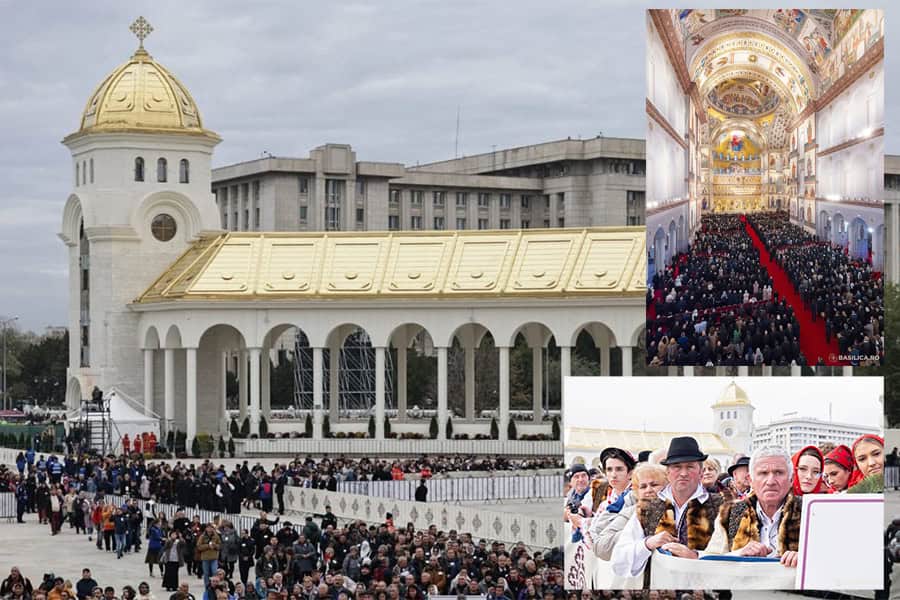
For the political class, this day was a photo opportunity. The same men and women who, for decades, have drained Romania through corruption, destroyed public trust, and sold the nation’s resources under foreign interests, were now sitting comfortably inside the grand cathedral. They arrived in black limousines, surrounded by security, applauded by a carefully screened audience. The protocol was immaculate. The symbolism was deliberate.
For the people — the true builders of this cathedral — there was no invitation, no red carpet, no place at the table. Ordinary Romanians, those who paid taxes, donated coins, or even gave up a piece of bread to support what was meant to be a national altar, were left outside in the cold, behind fences, treated as if they were intruders at their own creation.
That image — of the elite inside and the faithful outside — speaks volumes about the moral crisis of modern Romania.
A Monument Built on the Backs of the Poor
The People’s Salvation Cathedral was built with the promise of national renewal. It was supposed to be “a cathedral of all Romanians,” a spiritual sanctuary rising from the wounds of history. But in reality, it has become a mirror of the very sins it was meant to transcend.
For years, the project has absorbed massive state funding, while schools, hospitals, and rural infrastructure fell apart. Priests blessed the concrete, while families struggled to afford heating and food. Each new donation campaign was presented as an act of faith — but the faith of whom? For the poor, it was an act of sacrifice. For the politicians, an act of branding.
And yet, despite this painful imbalance, millions of Romanians still believed. They hoped that their faith, their small contributions, their tears and candles would mean something. They believed that one day, this monumental structure would belong to them — a symbol of spiritual rebirth in a country that has suffered too long from humiliation and injustice.
Today they learned otherwise.
The Great Illusion: Church and State United in Corruption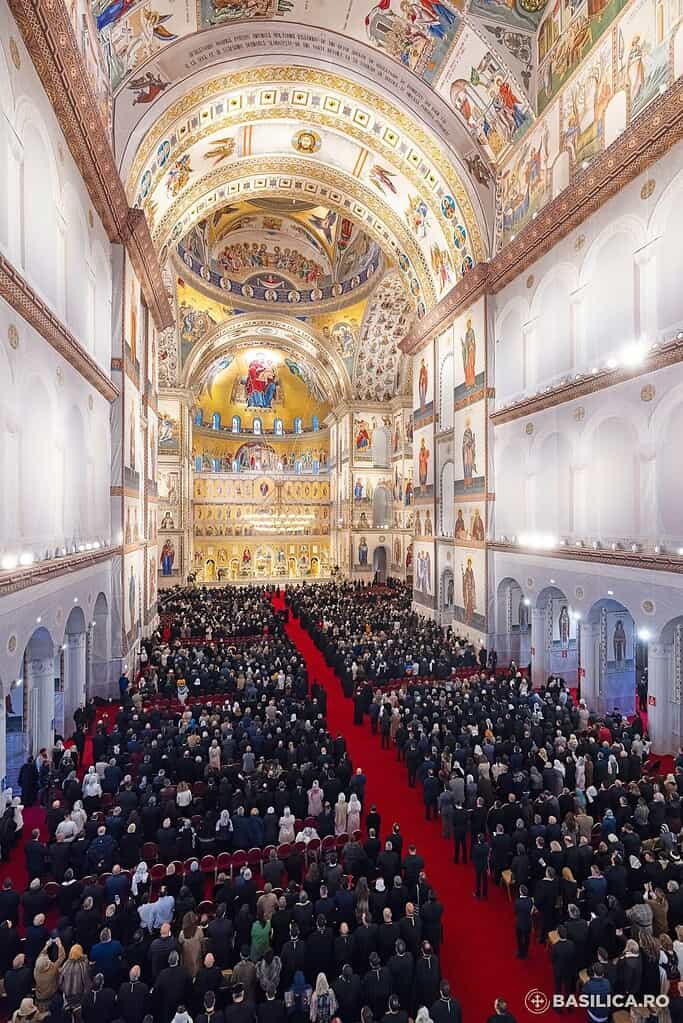
Romania’s Constitution guarantees the separation of Church and State, but that line has long been erased. What exists today is not separation, but a partnership of convenience — one that trades morality for political influence, and faith for money.
Politicians use the Church as a moral shield. They attend religious events, kiss icons for cameras, and quote Scripture during election campaigns. It gives them the appearance of righteousness — a cheap absolution for the sins of governance.
In return, the Church hierarchy receives public funding, land, privileges, and silence. It blesses governments, inaugurations, and buildings; it grants legitimacy without accountability.
Thus, both institutions have become two faces of the same fallen system: one claiming to rule the body, the other the soul — yet both feeding off the same source of power and manipulation.
What we saw today at the consecration was the theatrical manifestation of this unholy alliance. The people who have systematically undermined Christianity through immoral laws, cultural erosion, and mass manipulation were seated as honoured guests. The very citizens who uphold the faith in their homes, their parishes, and their daily sacrifices — those who still fast, pray, and hope — were exiled to the courtyard.
It is a profound spiritual inversion: the shepherds are inside with the wolves, while the flock remains outside the gate.
Faith Without Justice Is Just Spectacle
A Church that forgets its people ceases to be a Church. It becomes an institution — hollow, self-congratulatory, and complicit in the machinery of corruption.
The mission of Christ was not to dine with power, but to stand with the oppressed. Yet today, the Church in Romania seems more concerned with protocol than with poverty, more invested in political prestige than in moral leadership.
The tragedy is not that politicians attended the consecration — it’s that their presence defined it. The sacred moment became a spectacle of privilege. The ceremony that should have healed divisions instead reinforced them.
Outside, people wept — not out of joy, but out of disappointment. They prayed in silence, clutching icons against the winter wind, wondering why their faith had no seat at the table. In their faces, you could read the entire story of post-communist Romania: a people betrayed by every institution that promised to defend them.
A Nation in Need of Spiritual Truth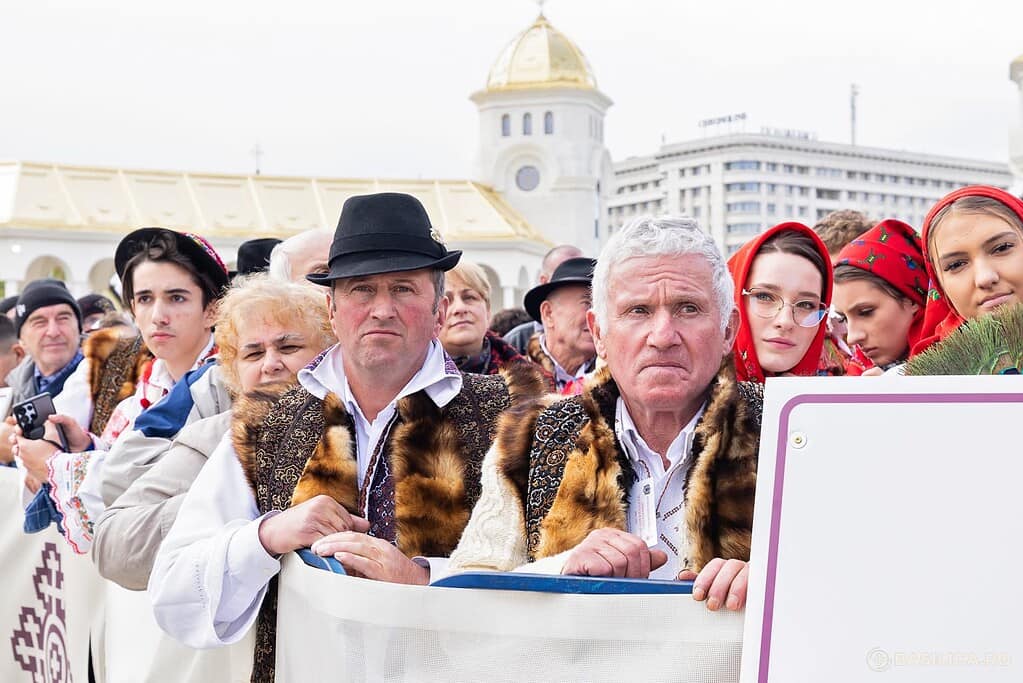
If today’s event proved anything, it is that Romania’s salvation will not come from cathedrals of marble, but from hearts of truth.
The people still have faith — pure, uncalculated, and humble. But faith without justice cannot flourish. The moral order of a nation depends not on its monuments, but on the integrity of its leaders and the courage of its citizens to demand accountability — from both the State and the Church.
The People’s Salvation Cathedral stands tall, but it has already lost its soul. It may rise above Bucharest as a symbol of power, but not of purity. True salvation will begin the day Romania’s rulers kneel beside their people, not above them — the day the Church reopens its doors not for the elite, but for the believers who built it brick by brick, coin by coin, prayer by prayer.
Until then, we will continue to witness the same painful image:
Faith behind barriers. Power inside the temple. And the people outside, still waiting for truth.